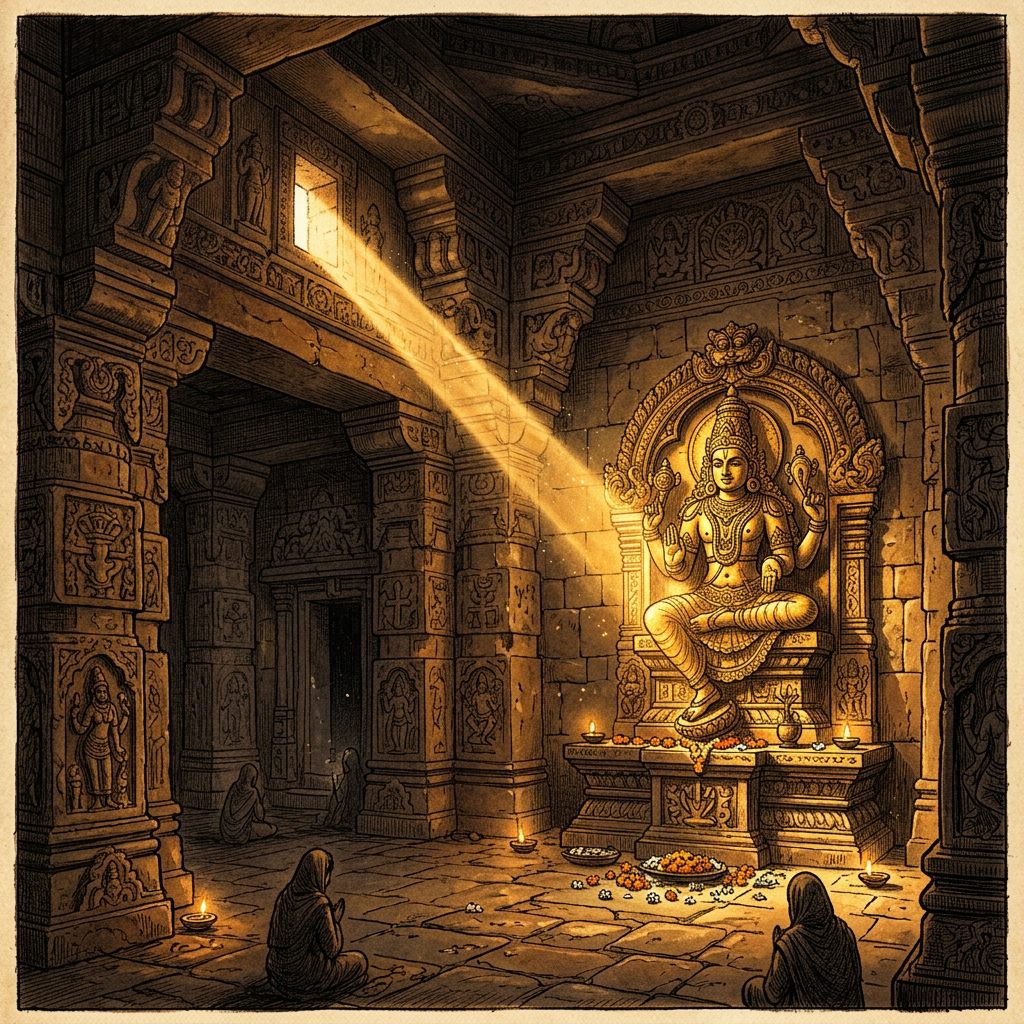
In a remote desert valley near Jalore, Rajasthan, a remarkably preserved 9th-century temple dedicated to the Navagrahas (the nine celestial bodies) has been identified. The temple's most striking feature is an intact solar projection system: a series of narrow apertures and polished stone reflectors that channel sunlight onto specific planetary deities at precise times during the solar year. This architectural feat demonstrates the advanced level of Indian archaeoastronomy during the Gurjara-Pratihara period.
The temple is built on a high platform and features fine sandstone carvings of Rahu, Ketu, and the seven traditional planets. Unlike many other temples of the era, the inner sanctum remains largely untouched, allowing researchers to study the alignment of the reflectors in their original positions. Local heritage groups and the ASI are currently developing a plan to secure the site and establish a research station to observe the solar alignments during the upcoming summer solstice.