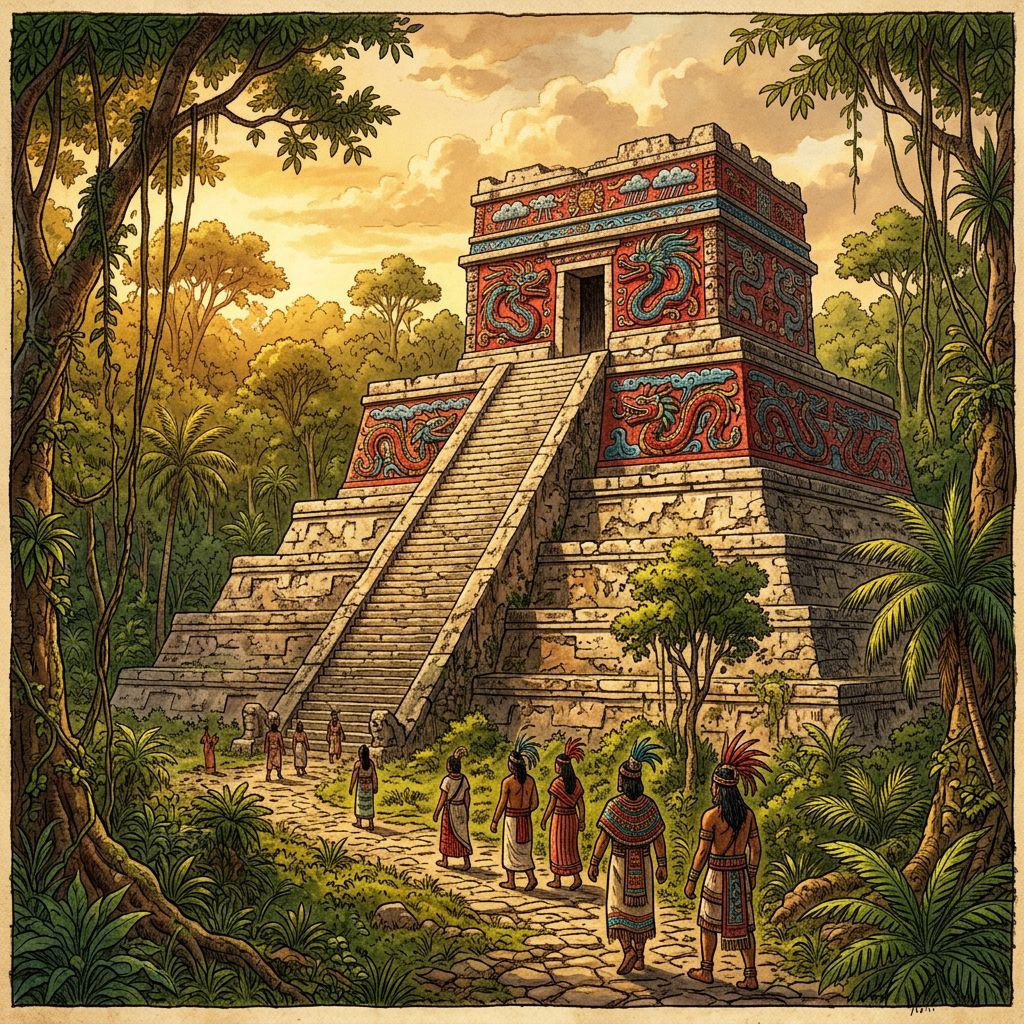
Archaeologists in the Mixteca Alta region of Mexico have identified a previously unrecorded Mixtec temple dedicated to Dzahui, the deity of rain often represented as a feathered serpent. Dating to approximately 500 CE, the structure is notable for its remarkably preserved polychrome stucco reliefs that still retain vivid shades of turquoise and cochineal red. These carvings depict a complex cosmological battle between the Earth and the Sky, providing new insights into early Mixtec religious doctrine.
The discovery was made using high-resolution drone-mounted LiDAR, which penetrated the dense forest canopy to reveal the stepped pyramid's distinct silhouette. Upon manual excavation, the team discovered a central sacrificial pit containing obsidian blades and jars filled with rain-harvested water, ritualistically sealed with large limestone slabs to ensure the deity's favor during periods of drought.
Unlike the larger Zapotec cities of the era, this Mixtec site appears to have been an isolated ritual center for agrarian elites. Local indigenous communities are collaborating with the National Institute of Anthropology and History (INAH) to ensure that the site is protected from looters while maintaining its traditional sanctity for modern rain-calling ceremonies.