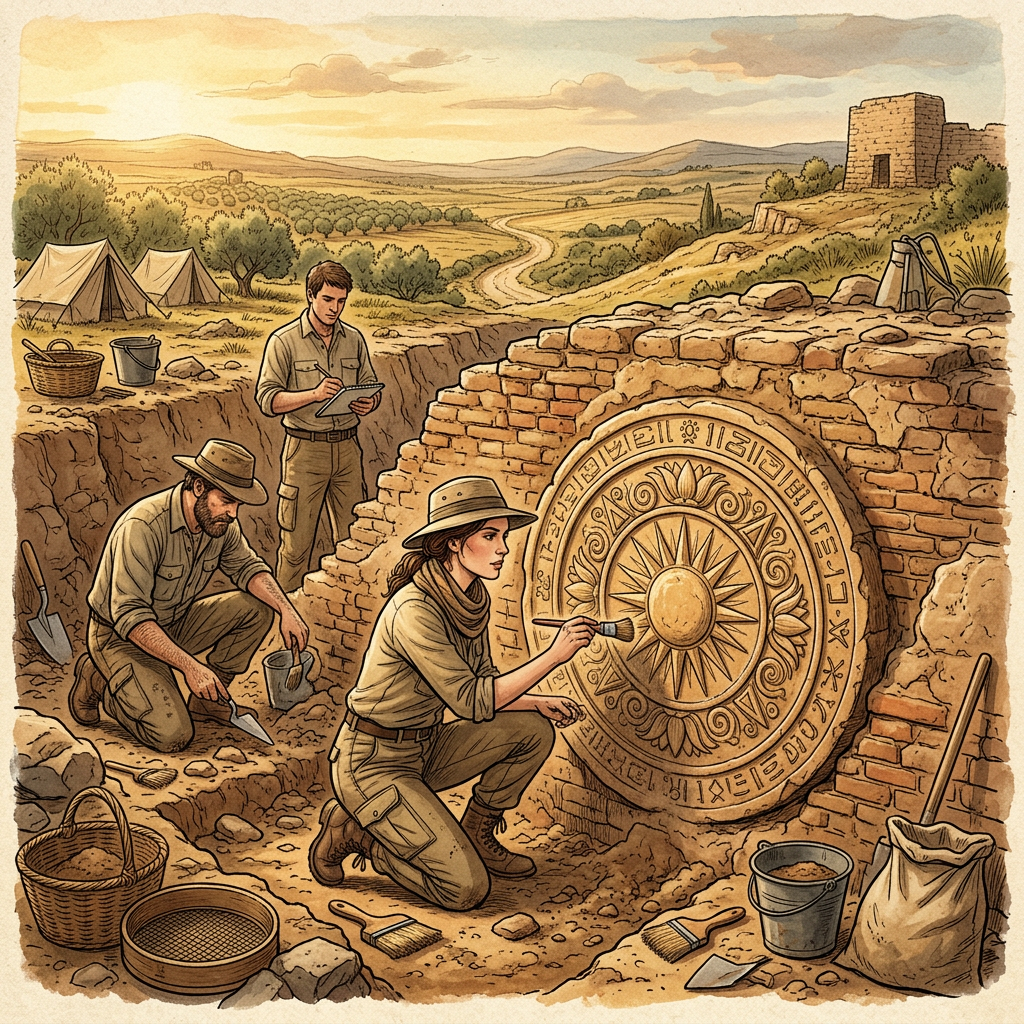
A rare structural temple belonging to the little-known Salankayana dynasty has been discovered near Eluru in Andhra Pradesh. Dating to the early 4th century CE, this sun temple is one of the oldest brick-and-stone religious structures in the region. The find was triggered by farmers who struck ancient foundations while deepening an irrigation pond, leading to an immediate intervention by the Archaeological Survey of India (ASI).
The temple features a unique square sanctum and a long rectangular porch, characteristic of early Brahmanical architecture. Archaeologists recovered a beautifully carved stone medallion depicting a solar disc surrounded by lotus petals, which served as the primary object of worship before the later adoption of anthropomorphic Sun-God idols. The presence of Salankayana bull-emblem seals at the site confirms the royal patronage of this early Andhra kingdom.
Preservation experts are now documenting the lime-mortar composition used in the bricks, which has survived centuries of coastal humidity. This discovery provides critical data on the evolution of solar worship in South India, predating the more famous medieval sun temples by several centuries and highlighting the Salankayanas' role in standardizing early temple layouts.