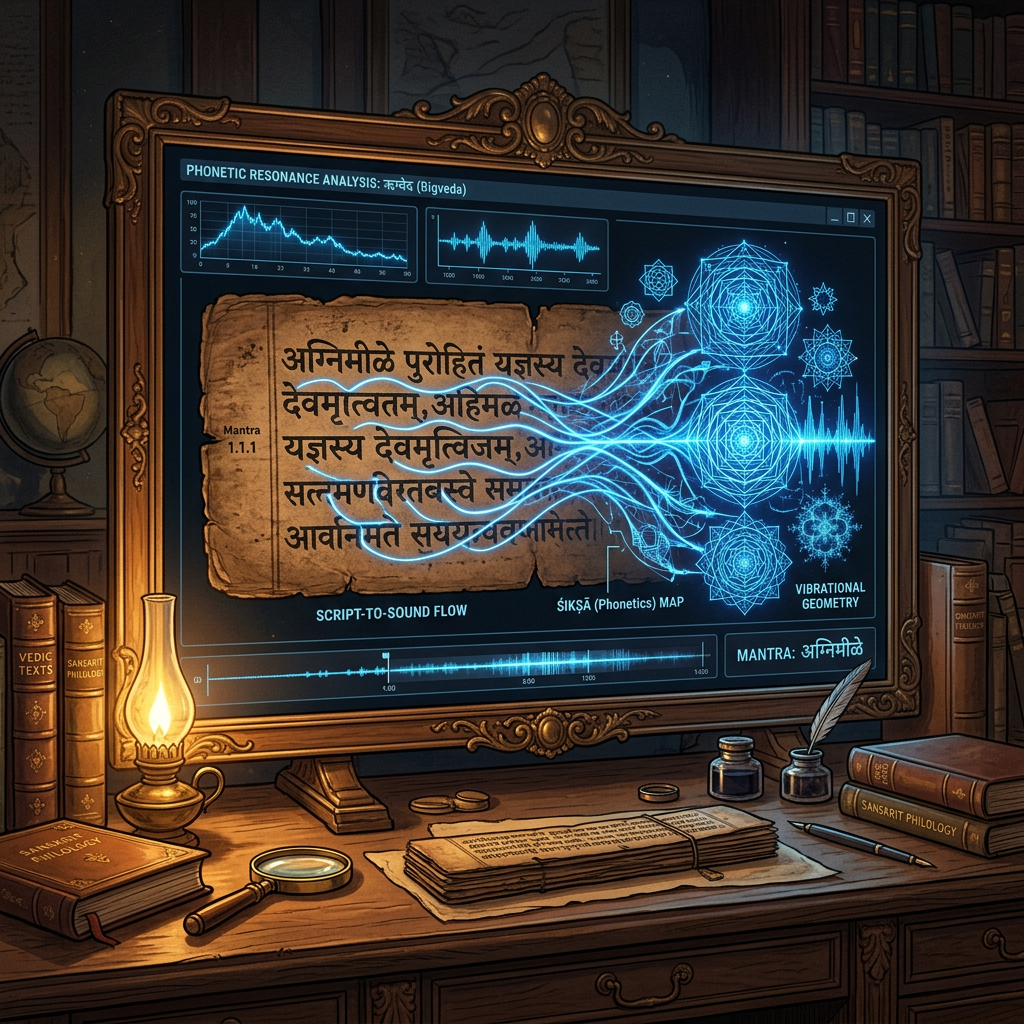
Using advanced multispectral imaging and deep-learning linguistic models, researchers at the Bhandarkar Oriental Research Institute have successfully deciphered a heavily damaged 12th-century manuscript titled 'Sabda-Chintamani'. The text appears to be a radical expansion of Bhartrihari's philosophy of language, arguing that sound (Sabda) is not just a carrier of meaning but a fundamental substance that structures physical reality. The AI's reconstruction revealed previously unknown chapters detailing a 'geometry of phonetics' that correlates specific vowel resonances with elemental shifts in the environment.
The manuscript's author, a scholar named Vakpati-Siddha, posits that the act of naming an object is a metaphysical event that stabilizes the object's form in the cosmic mind. This 'Linguistic Realism' challenges the more common view that words are merely arbitrary conventions. This breakthrough offers a profound new look at medieval Indian semiotics and the intersection of grammar, philosophy, and the perceived material world, providing a digital roadmap for deciphering similar fragments in the future.