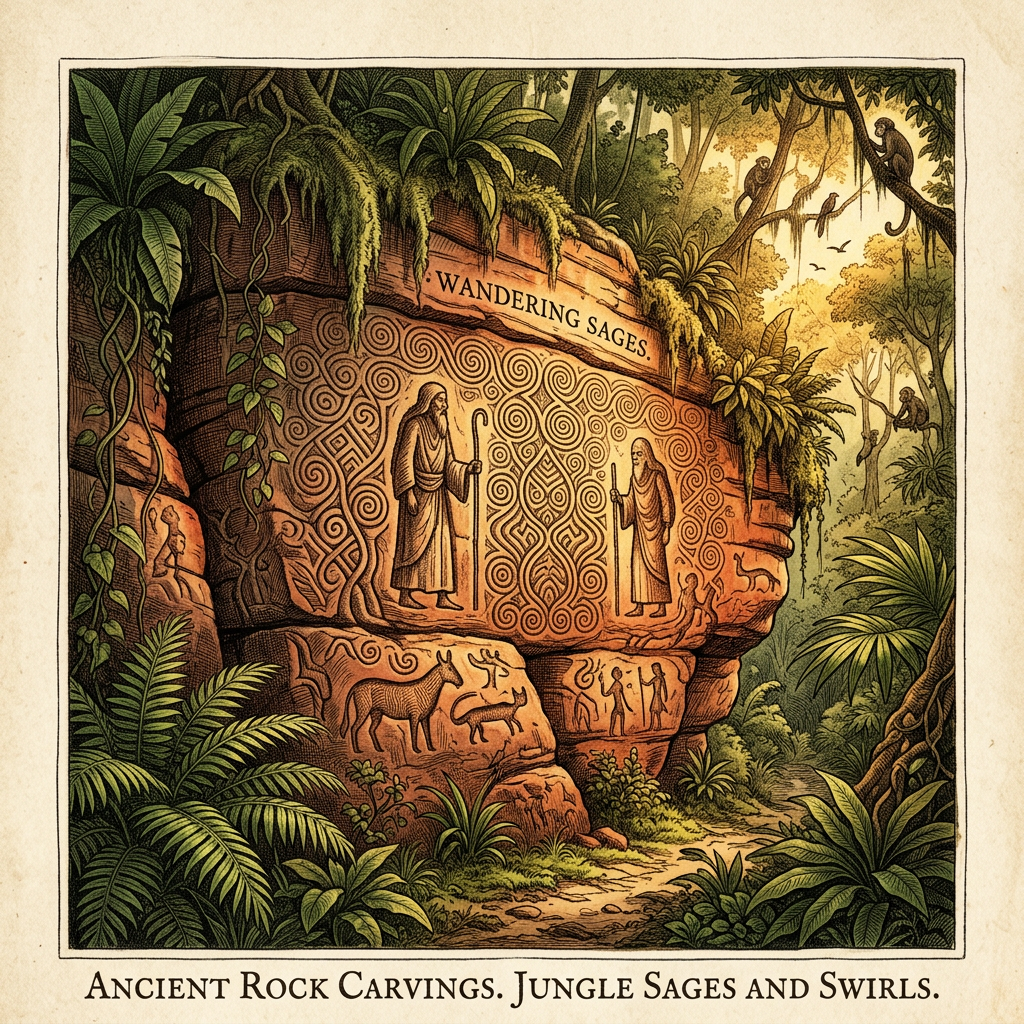
Recent findings in the Vindhya Range have brought to light a series of rock inscriptions belonging to the Vratya tradition, an enigmatic group of ancient Indian wandering ascetics. Dated to the 4th century BCE, these inscriptions describe 'Vratya-Dharma', a philosophy of radical freedom and nomadic wisdom that exists outside the orthodox ritualistic structures of the time. The text emphasizes 'unfettered movement' as both a physical practice and a mental prerequisite for attaining ultimate truth.
These inscriptions challenge the notion that ancient Indian philosophy was exclusively settled and temple-centric. The Vratya philosophy, as revealed in these carvings, values the 'epistemology of the road,' suggesting that truth is something discovered through constant change and interaction with diverse landscapes. This discovery provides crucial evidence of the diversity within Sanatan Dharma's historical development, highlighting a strand of thought that prioritized personal experiential insight over traditional academic study.