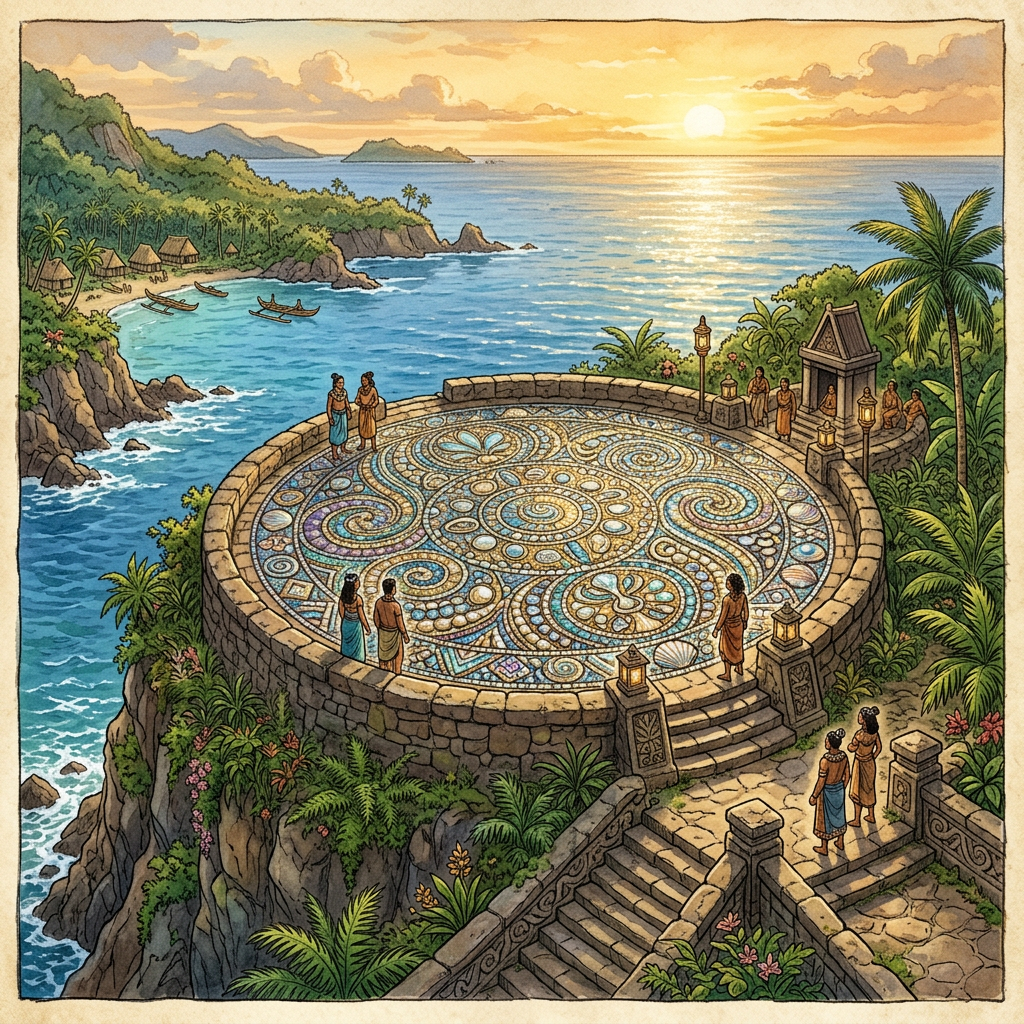
Excavations on the island of Santa Cruz in the Solomon Islands have revealed expansive shell-mosaic dance platforms belonging to the Lapita culture. These platforms, constructed using thousands of precisely arranged bivalve shells, date back 3,000 years and are situated overlooking the ocean. The site is believed to be the primary venue for 'First-Wave' festivals, ancient ceremonies dedicated to the arrival of the first seasonal migrations and the blessing of new seafaring vessels.
The layout of the platforms suggests a complex choreography where dancers would move in patterns mimicking the tides. Found embedded in the mosaic were ritual fishhooks made of pearl shell, indicating a strong link between performance and maritime subsistence. This find provides vital clues into the ceremonial life of the Lapita people and the long-standing importance of oceanic cycles in Pacific cultural heritage.