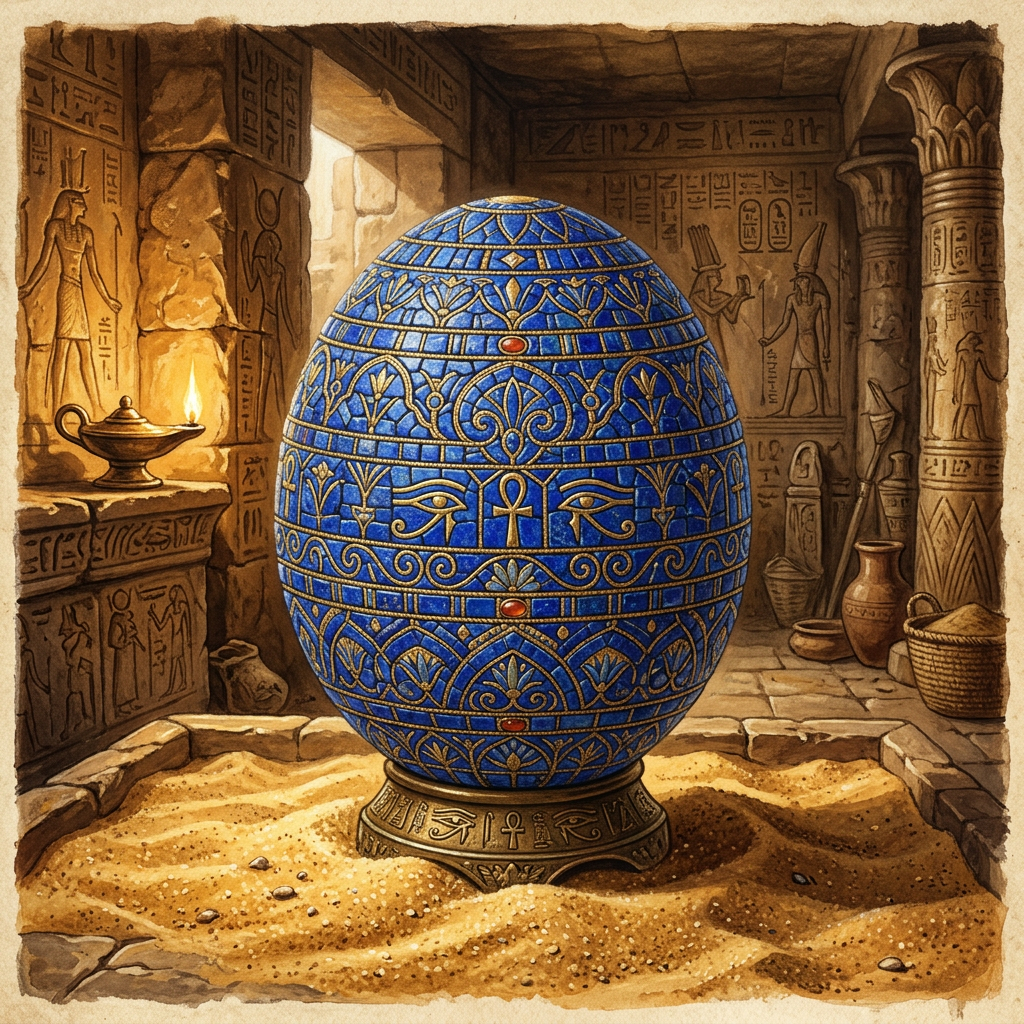
Archaeologists at the site of Kerma in modern-day Sudan have discovered a cache of lapis-incrusted ritual ostrich eggs dating to the peak of the Kingdom of Kush. The eggs, decorated with thousands of tiny blue lapis lazuli beads, were found arranged in a circular formation within a riverfront temple. They are believed to be the primary offerings for the 'Festival of the Blue Cataract,' a celebration of the Nile's seasonal clarity and the life-giving properties of the river's floods.
Each egg was found to contain sacred seeds of emmer wheat and barley, symbolizing the potential of the coming harvest. The use of lapis lazuli—a stone imported from as far away as Afghanistan—demonstrates the immense wealth and trade reach of the Nubian civilization during this era. This discovery offers a vibrant glimpse into the sensory and symbolic complexity of ancient African water festivals.