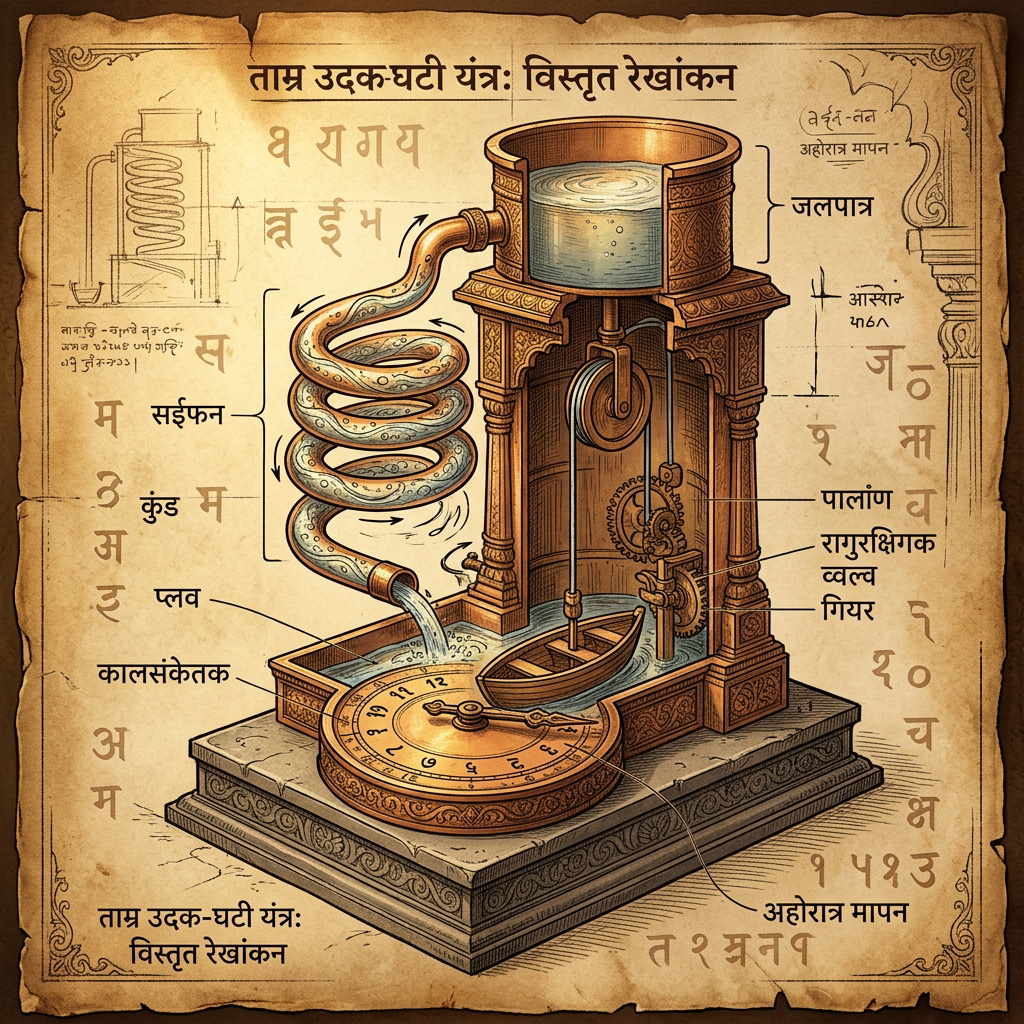
A breakthrough in computational paleography has led to the decipherment of 9th-century Sharada script fragments discovered in the Zanskar region. The texts, analyzed by an AI model trained on specialized Vedic technical lexicons, reveal sophisticated Sanskrit treatises on the physics of turbulent fluid motion and suction mechanics used to calibrate high-precision water clocks (Ghatika-yantra).
The study, published in the Journal of Archaeological Science, demonstrates that medieval Indian engineers had developed empirical models to account for viscosity changes and pressure differentials in narrow siphons. These findings suggest that ancient timekeeping devices were far more technologically complex than previously estimated, utilizing regulated suction to maintain a constant flow rate regardless of water volume.