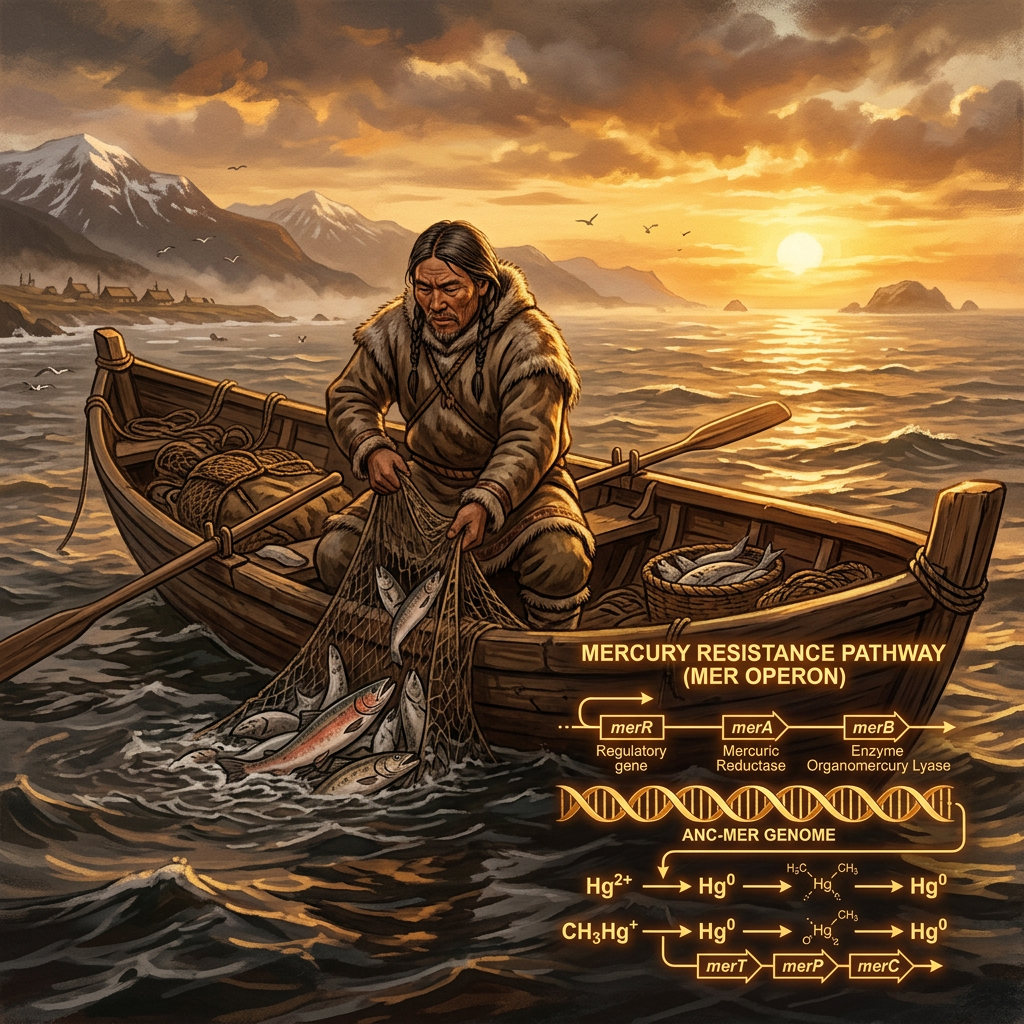
A major genomic study published in The Lancet Planetary Health has identified a unique evolutionary adaptation in 7,000-year-old remains from the Okhotsk culture in northern Japan. Analysis of dental calculus and bone fragments revealed specific polymorphisms in the GSTM1 and MT1A genes, which provide enhanced metabolic resilience to high levels of dietary mercury.
Researchers believe this adaptation was a direct response to a diet heavily dependent on marine mammals, which naturally bioaccumulate mercury in the Okhotsk Sea ecosystem. This study provides the first genetic evidence of ancient human populations developing a specialized physiological toolkit to survive localized environmental neurotoxins, highlighting the rapid pace of Holocene genetic selection.