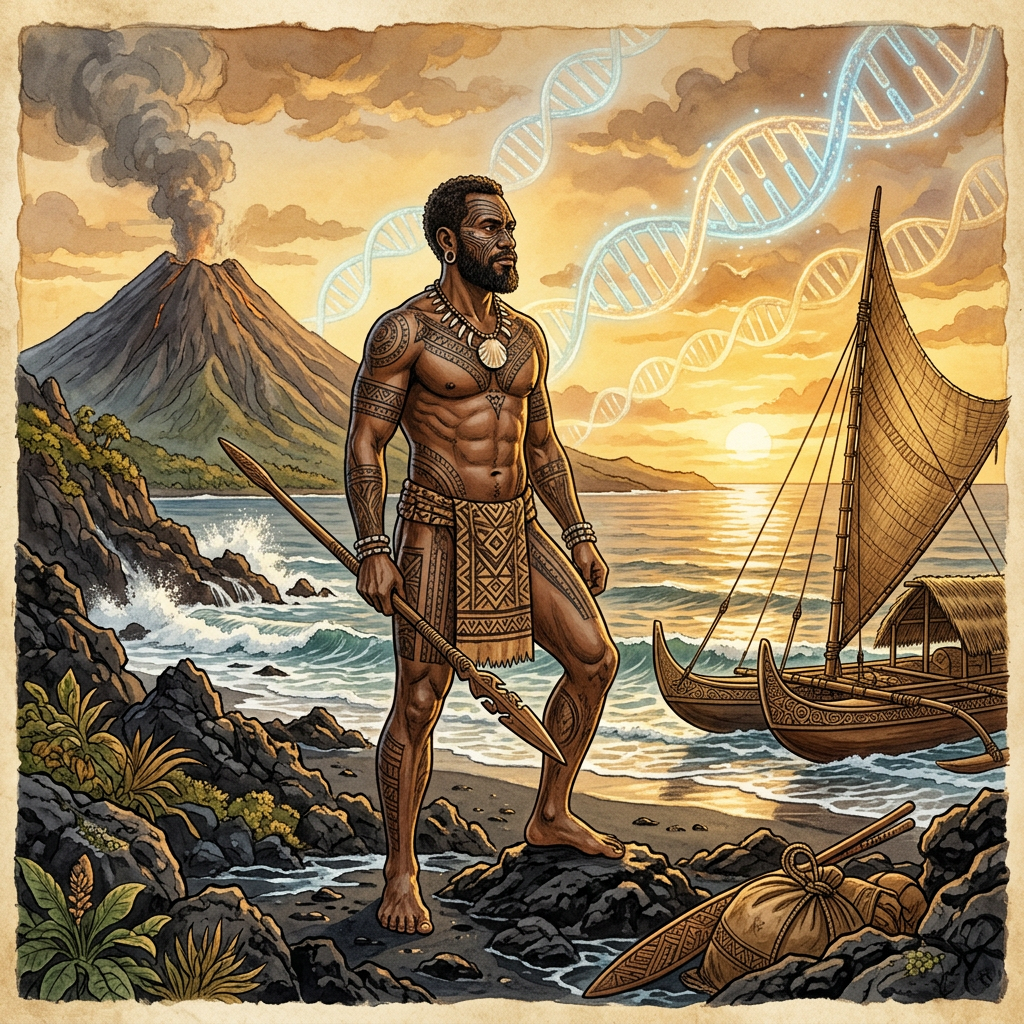
Paleogenomic researchers at the Max Planck Institute have sequenced the genomes of 3,500-year-old remains from the Teouma site in Vanuatu, uncovering a previously unknown genetic signature. This "ghost lineage" of early Austronesian explorers exhibits specific selection for metabolic pathways that mitigate the toxicity of high-selenium soils found in volcanic island chains.
The study, published in Science, provides a more nuanced view of the colonization of Remote Oceania, suggesting that successful settlement required rapid genetic adaptation to unique island geochemistries. This research reshapes our understanding of the fitness challenges and physiological bottlenecks faced by early maritime societies as they expanded into the deep Pacific.