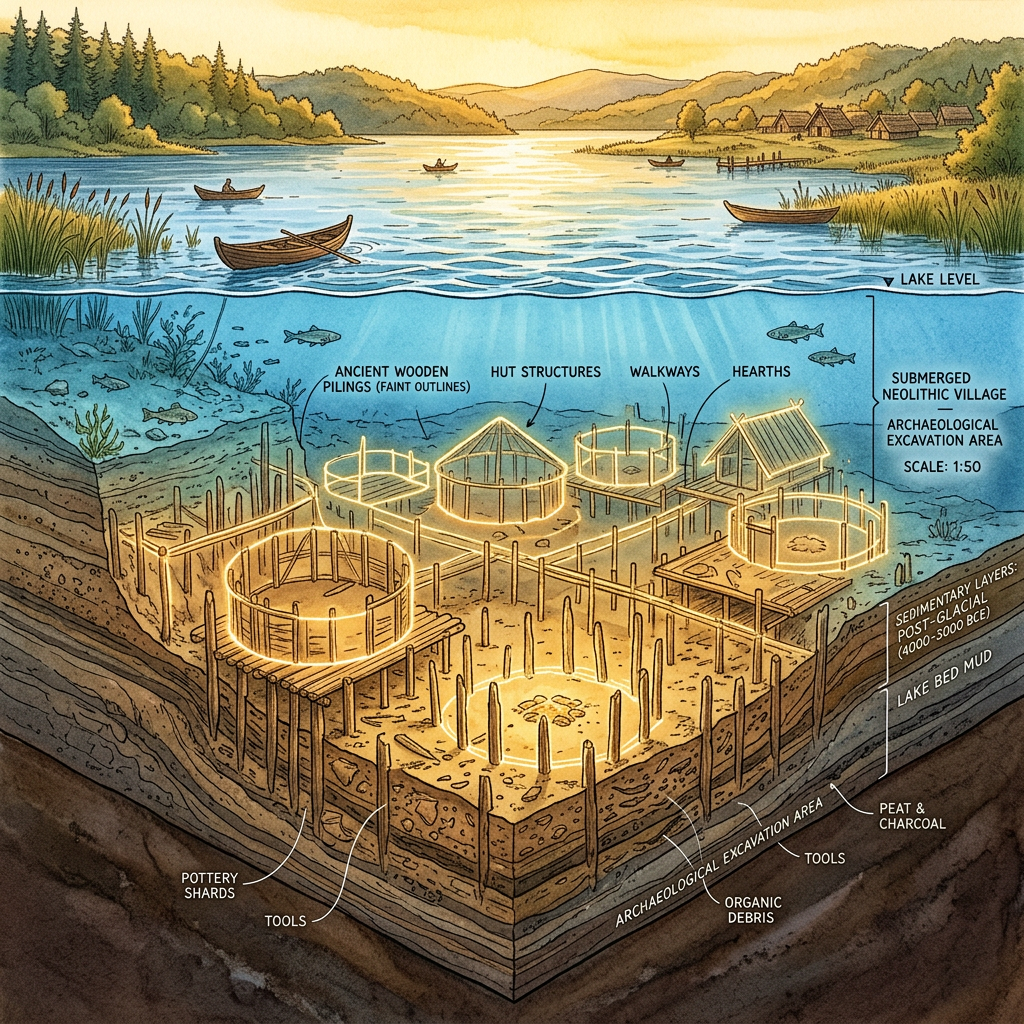
A new generation of Quantum-Pulse LiDAR has allowed maritime archaeologists to map the most detailed underwater survey of Lake Geneva to date, uncovering a series of perfectly preserved Neolithic pile-dwelling villages. The technology can penetrate deep silt layers that traditional sonar often misses, revealing the architectural footprints of wooden huts and walkways dating back to 4000 BCE.
The 3D models generated by the survey show that these settlements were far more complex than originally hypothesized, featuring defensive palisades and centralized communal areas. Preservation experts believe the anaerobic conditions of the lake bed have protected organic materials, including textiles and wooden tools, which the research team plans to investigate using non-invasive remote-operated vehicles (ROVs).