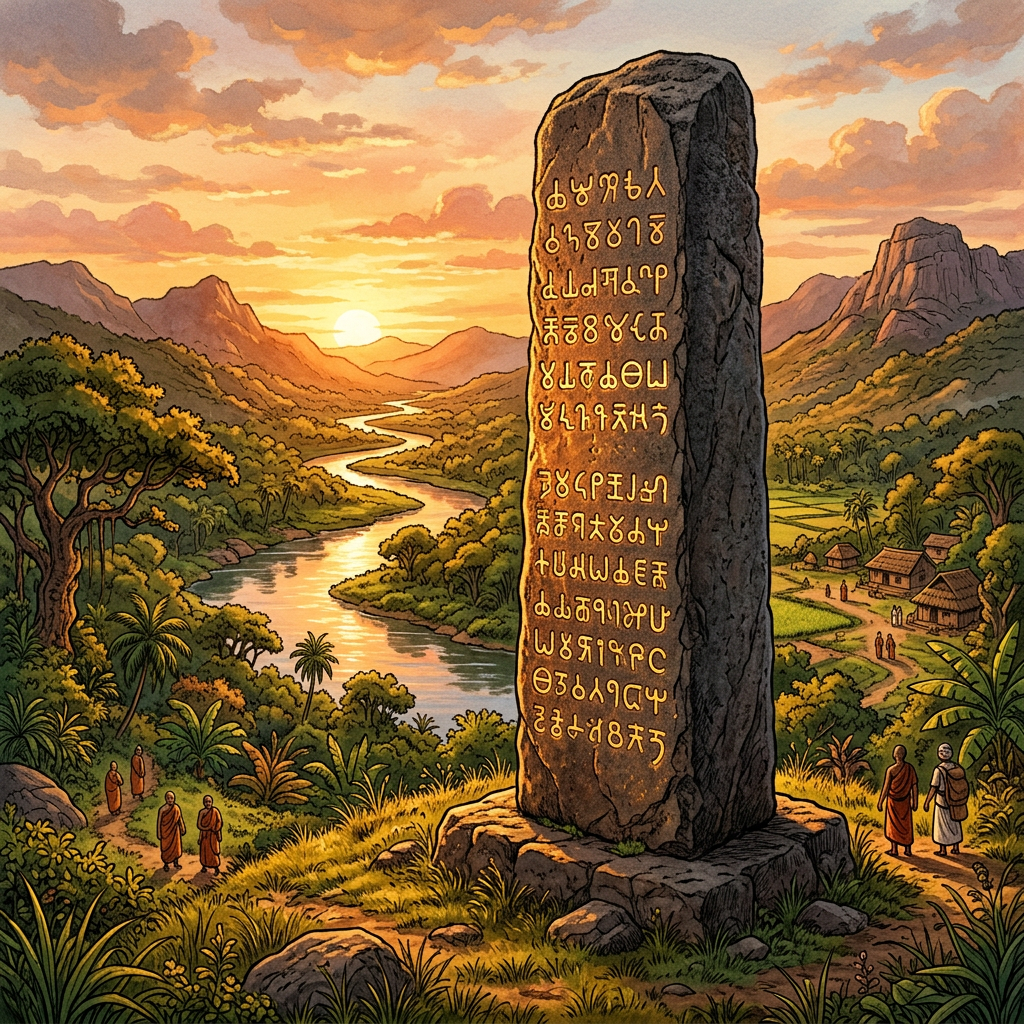
In the Krishna River basin, researchers have identified 4th-century BCE inscriptions on granite pillars that outline the 'Dharma-Kula' or the 'Ethics of Ancestral Virtue'. These texts suggest that individual moral responsibility in ancient India was deeply tied to the 'karmic lineage' of the family, providing a rare look into the sociopolitical application of Vedic ethics.
The inscriptions describe virtue as a collective inheritance, where the actions of ancestors are believed to shape the ethical landscape of future generations. This discovery reshapes our understanding of early Indian social structures and the metaphysical foundations of duty and lineage during the pre-Mauryan period.