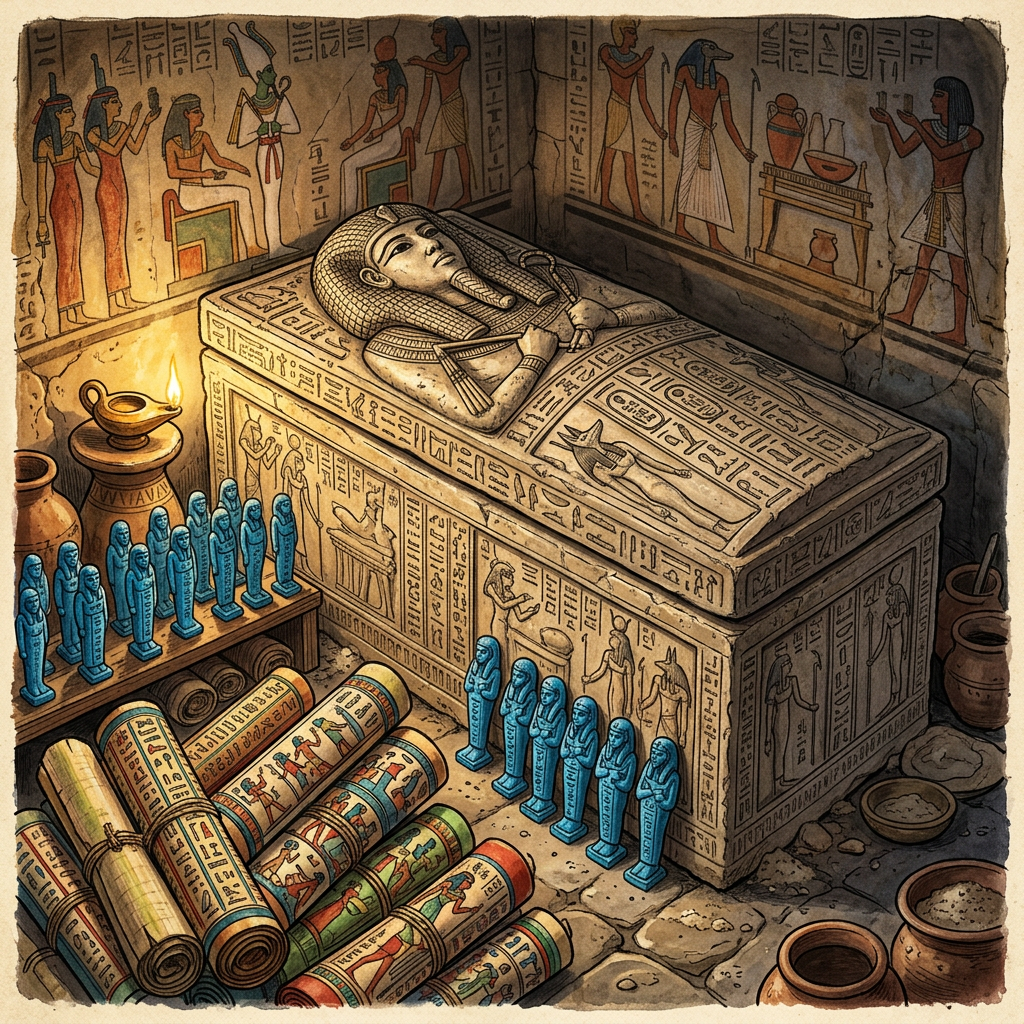
Archaeologists working in the Saqqara Necropolis have announced the discovery of an intact tomb belonging to a high-ranking official from the 26th Dynasty, identified as the 'Master of the Royal Archives.' The burial chamber, located south of the Step Pyramid of Djoser, contains a massive limestone sarcophagus surrounded by dozens of shabti figures and a collection of well-preserved funerary furniture. This find is significant for its rare preservation of administrative artifacts within a religious context.
The most extraordinary find within the tomb is a series of multi-colored hieratic papyrus scrolls, which appear to list state records and inventory logs for the royal treasury. Unlike traditional funerary texts like the Book of the Dead, these documents provide a rare glimpse into the bureaucratic efficiency of the Saite Period. Dr. Mostafa Waziri, head of the mission, noted that the ink remains remarkably vibrant, allowing for immediate preliminary translation of the titles and names inscribed on the rolls.
Initial analysis of the wall reliefs shows the official overseeing the delivery of linen and precious metals to the palace, suggesting his role was central to the pharaoh's economic administration. The tomb also contained a set of carved wooden boxes used to store these scrolls, marking the first time a dedicated 'archival kit' has been recovered from this era. This discovery is expected to rewrite the understanding of late-period Egyptian logistics and record-keeping.