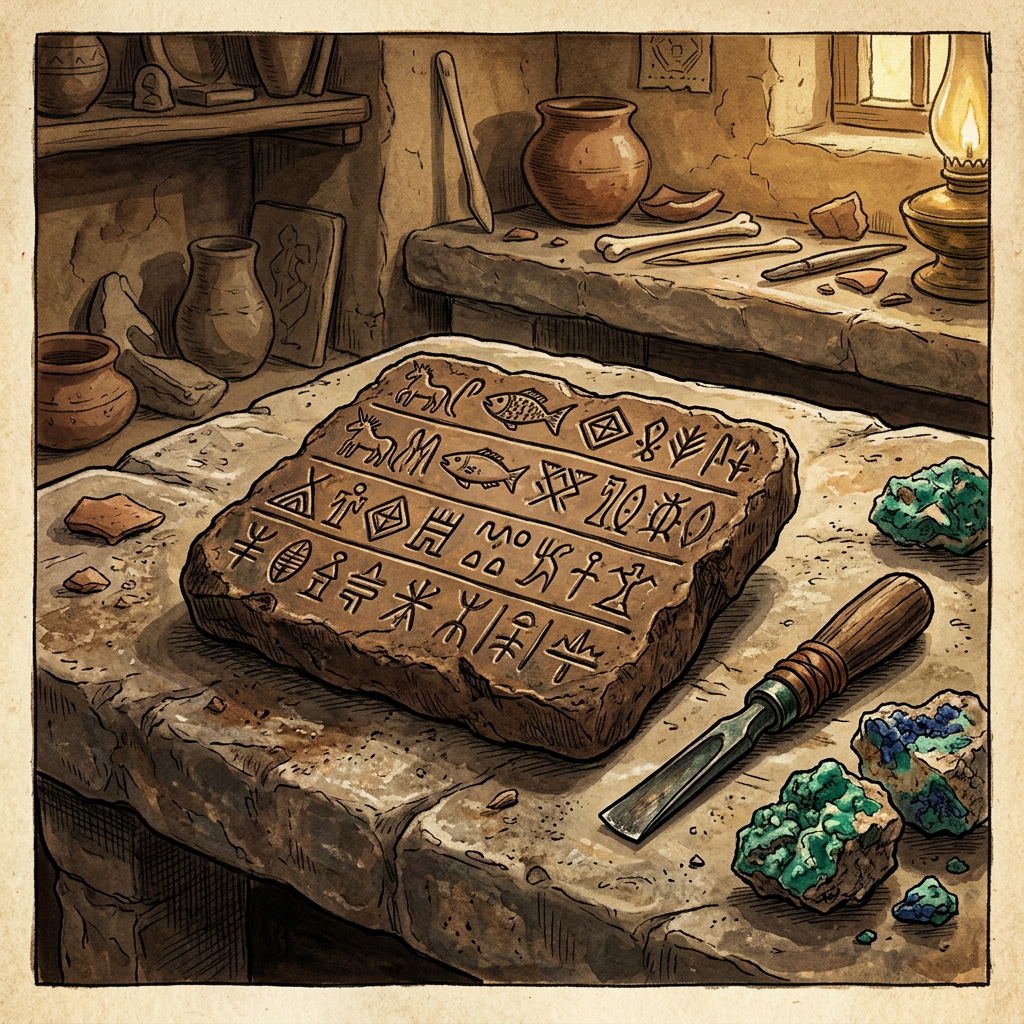
In a major development for Indus Valley Civilization research, archaeologists at a newly identified site in Haryana have unearthed what they describe as a 'Copper-Smith’s Archive.' The site, dating to the Mature Harappan period, includes a specialized workshop and a series of inscribed terracotta tablets that appear to be technical logs for metalwork. These tablets contain numerical sequences and symbols believed to represent specific alloy ratios and heating durations.
The archive was found adjacent to a large high-heat furnace that still contained residues of copper ore and tin. Unlike typical administrative seals, these tablets are more utilitarian, suggesting they served as industrial blueprints or recipes passed down within a guild of artisans. This discovery provides the first direct evidence of formalized technical education and standardized metallurgical practices in the ancient Harappan world.
Lead researcher Dr. Rajesh Kumar stated that the find clarifies how the Harappans were able to produce such high-quality bronze tools across vast geographical distances. The site also yielded several finished adzes and chisels that match the 'formulas' found on the tablets, proving a direct link between the written records and the physical artifacts. The discovery is currently being analyzed at the National Museum in New Delhi.