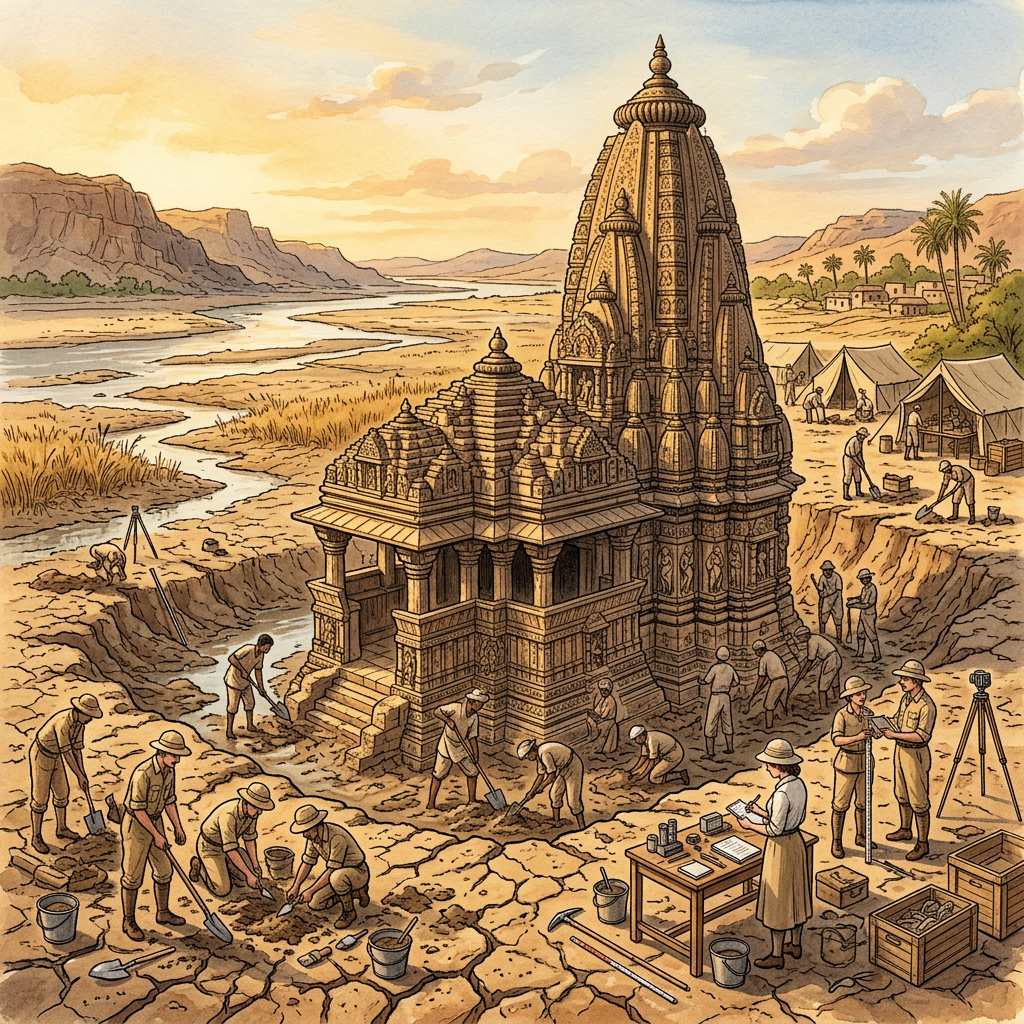
A severe drought in the Tiruchirappalli district of Tamil Nadu has led to a major archaeological breakthrough as the receding waters of a Kaveri River tributary exposed the ruins of an 11th-century Shiva temple. Attributed to the Later-Chola period, the structural temple features a massive granite sanctum that had been submerged for over a century following the construction of local irrigation barrages in the early 1900s.
Initial exploration by state archaeologists has yielded a cache of rare bronze votives, including lamps and small figurines of celestial attendants, buried within the silt of the inner courtyard. The temple’s outer walls are adorned with inscriptions detailing land grants to the local weaving community, offering a rare glimpse into the socio-economic fabric of the Chola heartland during the reign of Kulothunga Chola I.