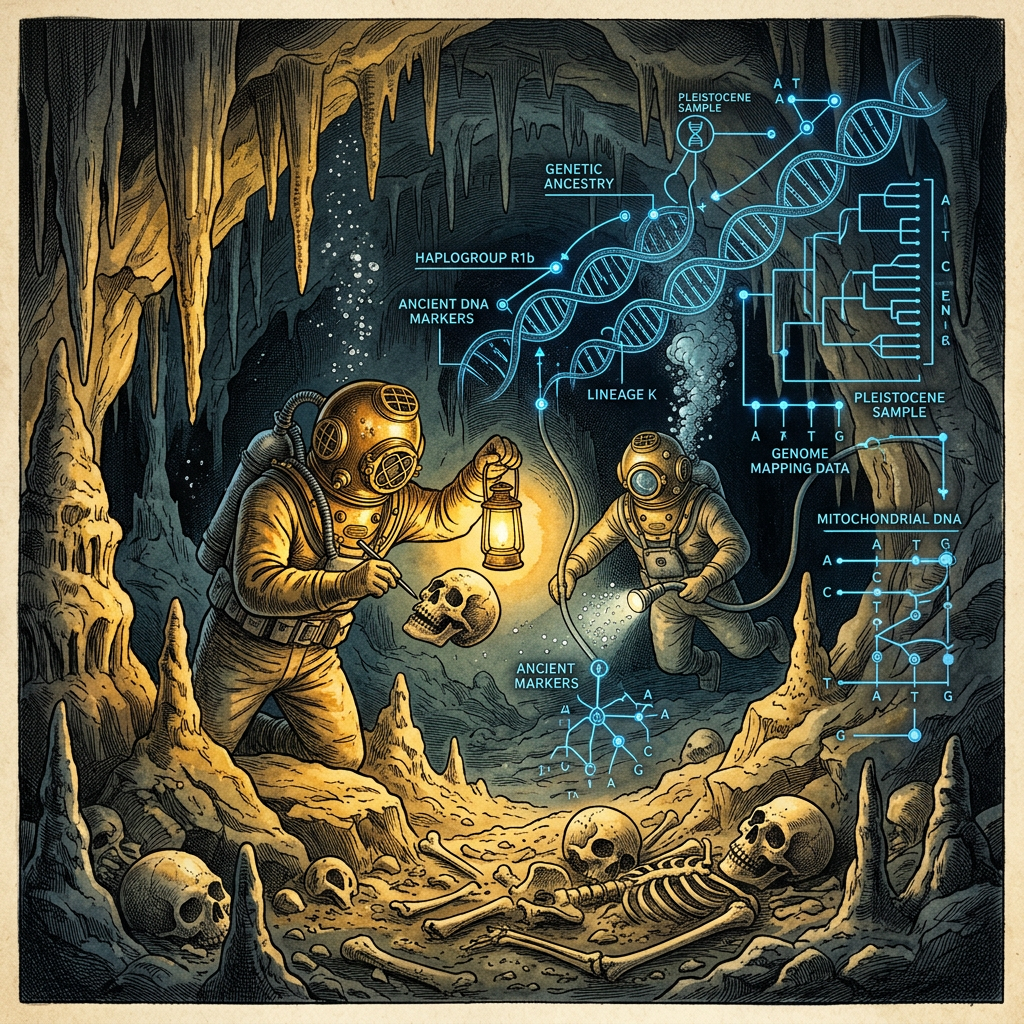
Paleogenomic analysis of skeletal remains recovered from a submerged limestone cave in the Solomon Sea has revealed the existence of a previously unknown human lineage. This "ghost" population, which inhabited the region approximately 11,000 years ago, carries unique genetic signatures suggesting long-term isolation and specialized immunity to local marine-borne arboviruses.
The research, published in Cell Reports, suggests that these early maritime explorers developed a highly robust innate immune response as an adaptation to the high-humidity, pathogen-rich tropical islands. This discovery reshapes the map of human migration in the Pacific, indicating that multiple distinct lineages occupied Oceania long before the arrival of modern Austronesian ancestors.