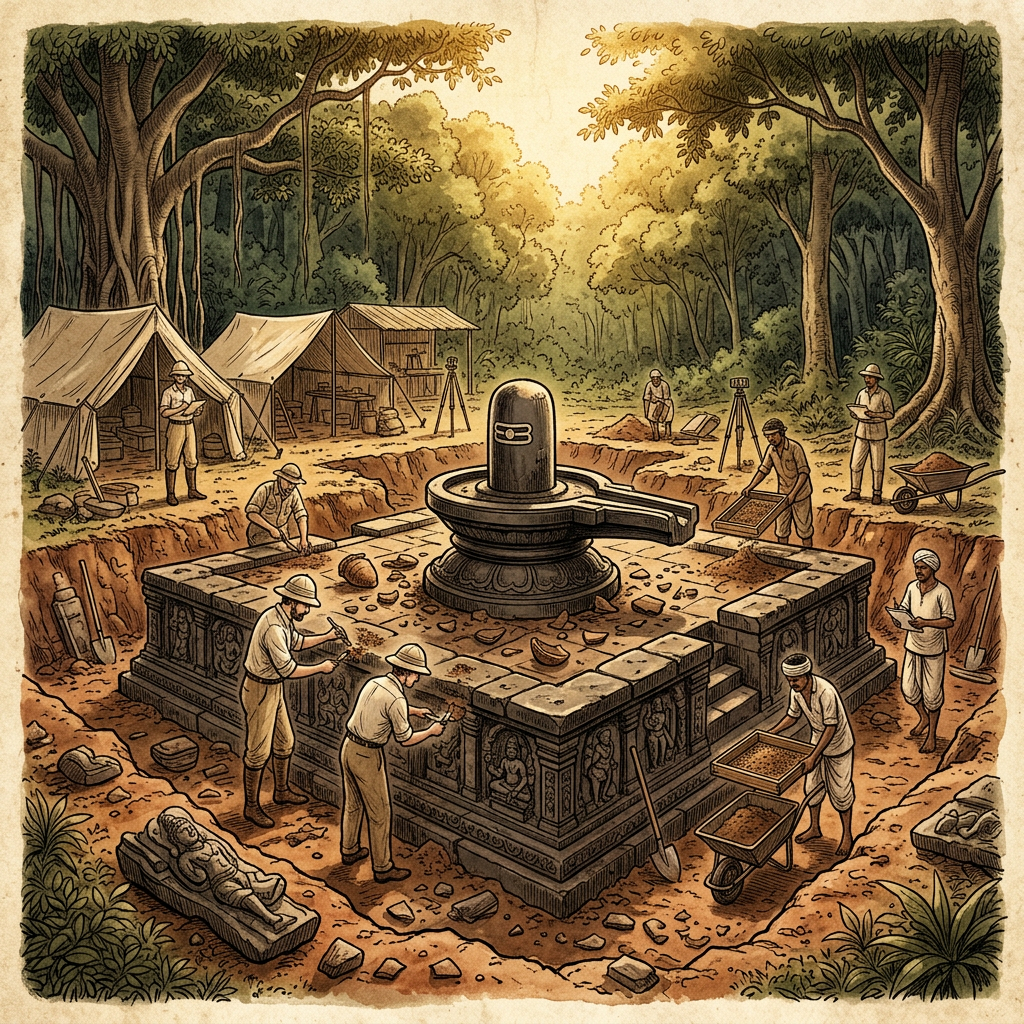
Archaeologists working in the remote Satpura foothills of Madhya Pradesh have unearthed a rare 8th-century Shiva temple that represents a stylistic transition between the Rashtrakuta and Kalachuri dynasties. The site is notable for the discovery of a mercury-glass dome fragment, suggesting an early use of reflective materials in sacred architecture to harness sunlight within the sanctum.
Excavations have revealed a panchayatana layout with four subsidiary shrines encircling a central mandapa. The primary structure features intricate basalt carvings of Vedic deities and a pristine mukhalinga. Researchers believe the site served as a significant spiritual center for nomadic guilds traveling through central India during the early medieval period, blending diverse architectural motifs from the Deccan and northern plains.