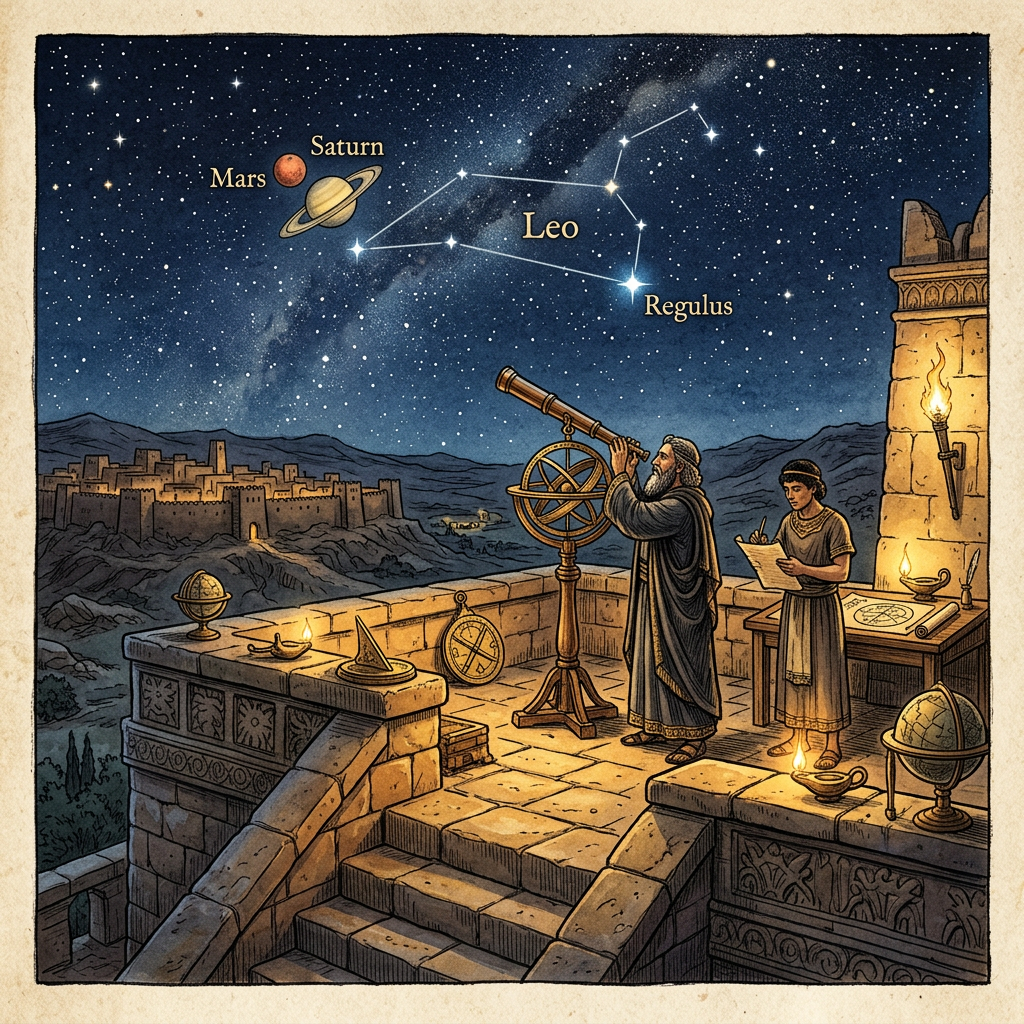
A computational study released by Archaeoastronomy International has provided strong empirical support for the astronomical antiquity of the Rigveda. By using advanced stellar-drift simulations, the research team correlated specific descriptions of the 'Celestial Lion' in the Samhita layers to a rare double planetary occultation involving Saturn, Mars, and the star Regulus (Magha) that occurred in 2750 BCE. The alignment matches the metaphorical descriptions of 'heavenly warriors' surrounding the 'shining throne' with sub-arcminute precision.
This study challenges the conventional chronology of Vedic literature, suggesting that the observational layers of the text were composed during the Early Harappan phase. The researchers argue that the precision of these observations indicates the use of advanced horizon-based instruments and a highly systematic tradition of celestial record-keeping. The '2750 BCE Magha Event' serves as a new chronological anchor, linking the linguistic and ritual structures of the Rigveda to a verifiable astronomical phenomenon in the third millennium BCE.