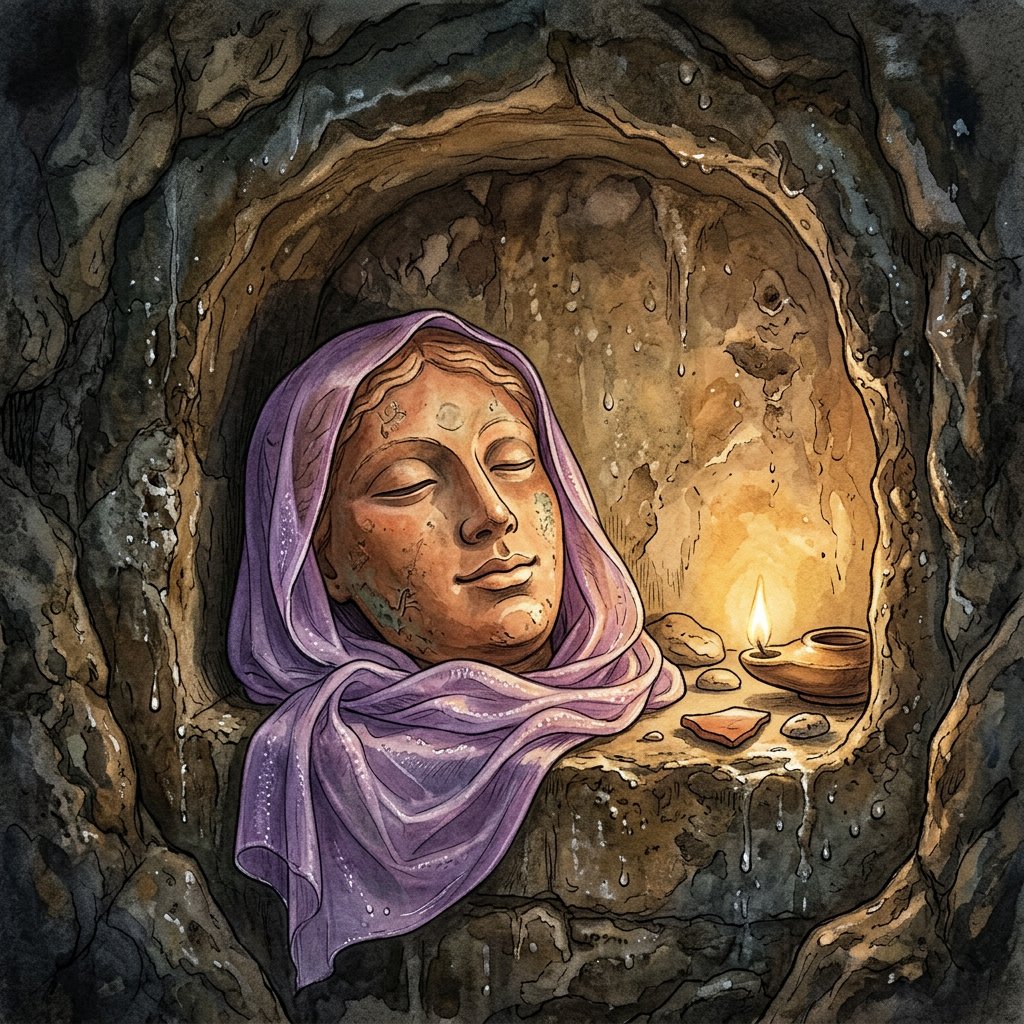
During a rescue excavation near the coast of Southern Italy, researchers have found a cache of silk-wrapped terracotta masks within a limestone niche. Dating to the 2nd century AD, the masks depict serene, water-dwelling entities and were protected by layers of ancient silk imported via early trade routes, pointing to the high status of the "Festival of the Sea-Nymph" (Nereidalia) in Magna Graecia communities.
The ritual context suggest that these masks were worn by young initiates during torchlight processions into the Mediterranean surf. The discovery of trace elements of sea-salt and purple murex dye on the silk suggests a lavish production that combined Roman theatricality with much older Greek maritime traditions, celebrating the bounty and protection of the sea.