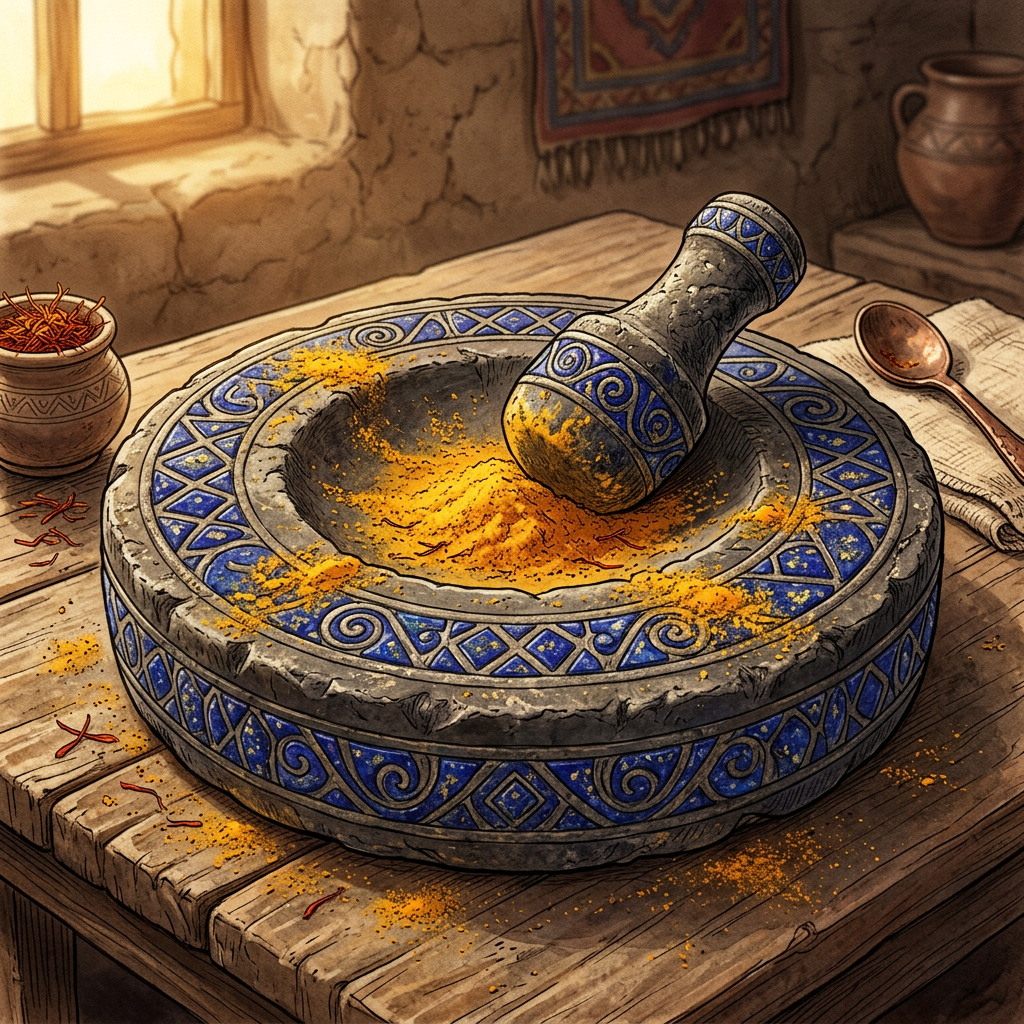
A breakthrough excavation at a secondary Harappan site in the Indus Valley has unearthed specialized stone grinders inlaid with lapis lazuli. These artifacts were found in a dedicated "aromatic quarter" and show significant traces of saffron and wild jasmine, suggesting that the preparation of scented powders was a central component of ancient spring-equinox celebrations in the region.
The discovery challenges previous assumptions that saffron was exclusively a trade luxury, suggesting instead that it played a vital role in local ritual hygiene and ceremonial adornment. Researchers believe these grinders were used to create pigments for a precursor to modern color festivals, where participants would be anointed with scented pastes to celebrate the arrival of the monsoon-adjacent spring season.