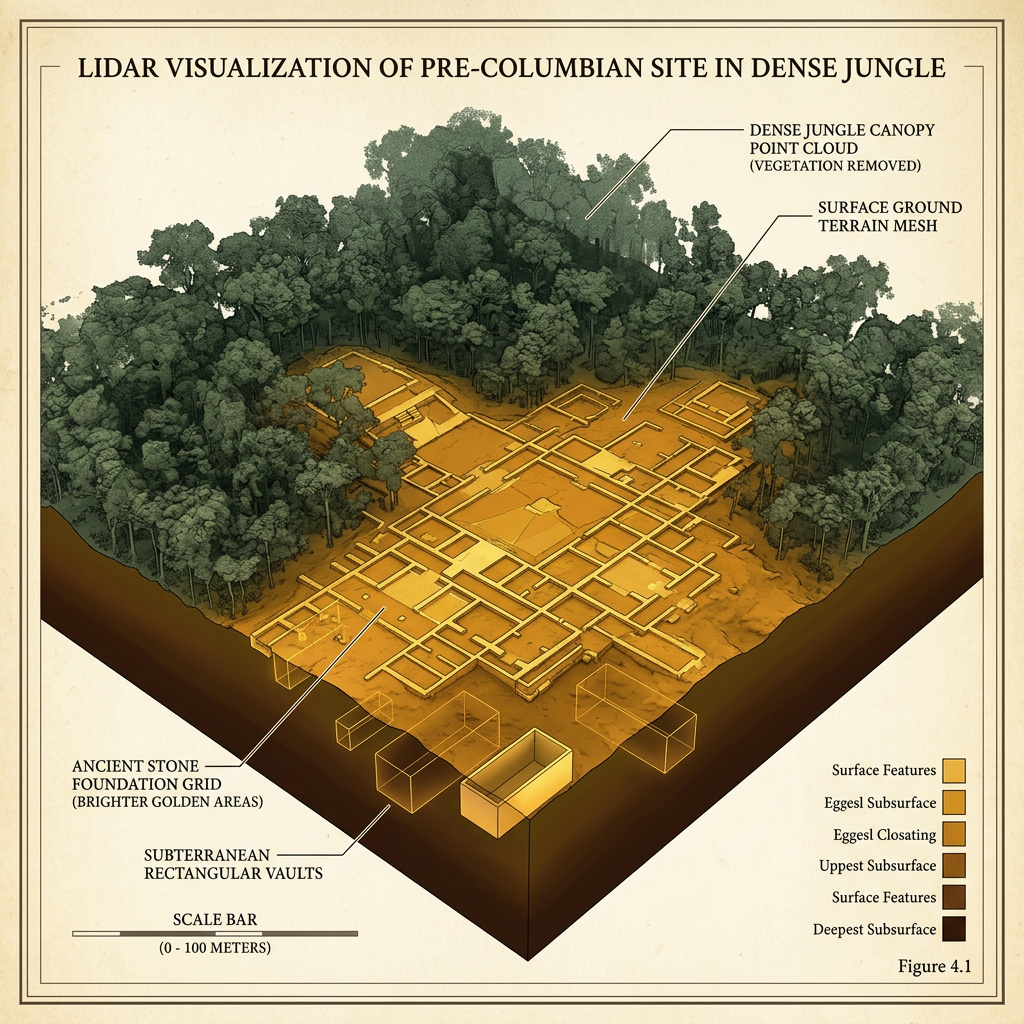
A high-resolution LiDAR survey conducted over the Petexbatún region of Guatemala has uncovered a massive urban complex specializing in the industrial-scale processing of tobacco. The mapping revealed thousands of previously hidden structures, including unique stone-lined subterranean vaults designed with passive ventilation systems for curing and drying large quantities of leaves. This industrial zone is surrounded by a network of specialized terraces separate from traditional maize fields.
Archaeologists suggest this discovery identifies a major economic pillar of the Late Classic Maya. The scale of the drying-vaults indicates that tobacco was produced not just for local ritual use, but as a high-value trade commodity exported throughout the Maya Lowlands. The site also features several ritual plazas with stelae depicting elite figures holding ceremonial smoking pipes, further linking the industrial production to religious status.