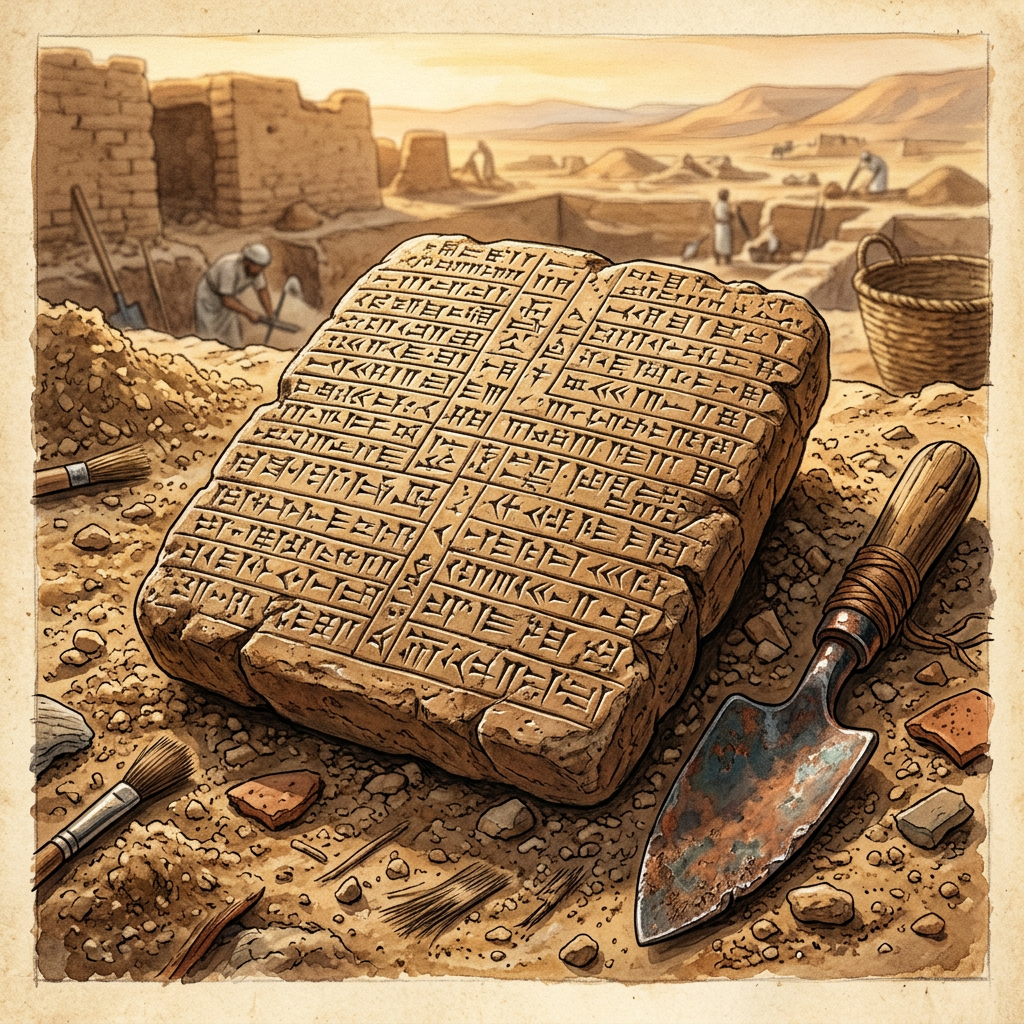
Excavations in the ancient Mesopotamian city of Girsu have brought to light a significant administrative archive focused on the maintenance of the region's vital irrigation networks. The find consists of over 200 cuneiform tablets detailing the seasonal dredging schedules and labor quotas required to remove silt from the main royal canals. These ledgers record the names of specialized supervisors and the volumes of sediment removed, measured in standard Sumerian units.
The discovery underscores the bureaucratic complexity required to sustain the agricultural heartland of Sumer. Unlike previous finds involving sluice gates or navigation, this archive specifically documents the logistics of silt management, proving that the city-states employed a permanent workforce dedicated to preventing the catastrophic clogging of the waterways that fed the empire.