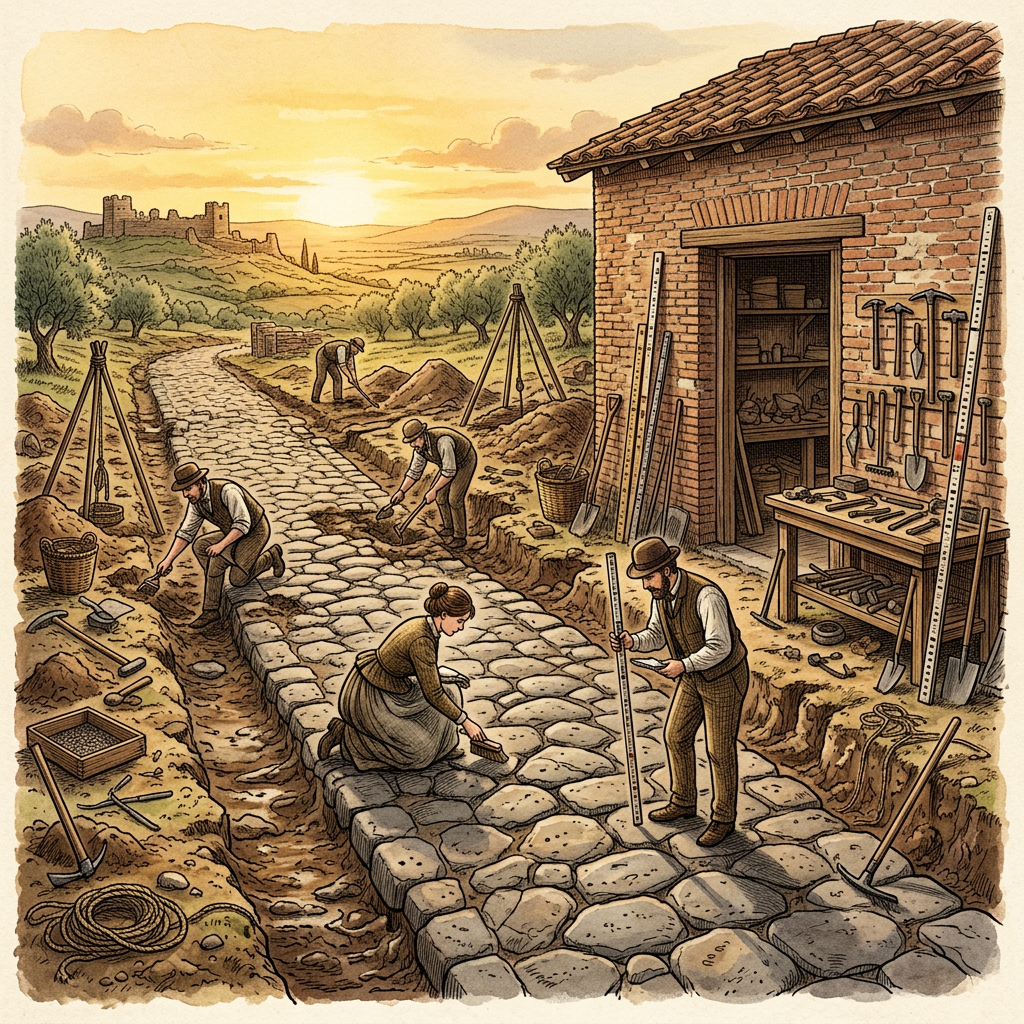
Archaeologists in the Extremadura region of Spain have identified a rare Roman administrative building dedicated to the upkeep of the Via de la Plata. The site, located near a major intersection of imperial roads, contained a series of lead tablets recording local budgets for basalt-stone replacement and the names of contractors responsible for specific milestones. Most remarkably, the excavation revealed intact stone-cutting templates used to ensure the uniform curvature of road pavers.
This 'Road-Maintenance Bureau' serves as physical evidence of the Roman Empire's rigorous infrastructure standards. The presence of specialized measuring rods and heavy iron picks within the bureau's storage rooms suggests it functioned as a regional hub for the Curatores Viarum (Road Overseers), ensuring that the military and trade arteries remained in peak condition for the rapid movement of legions and goods.