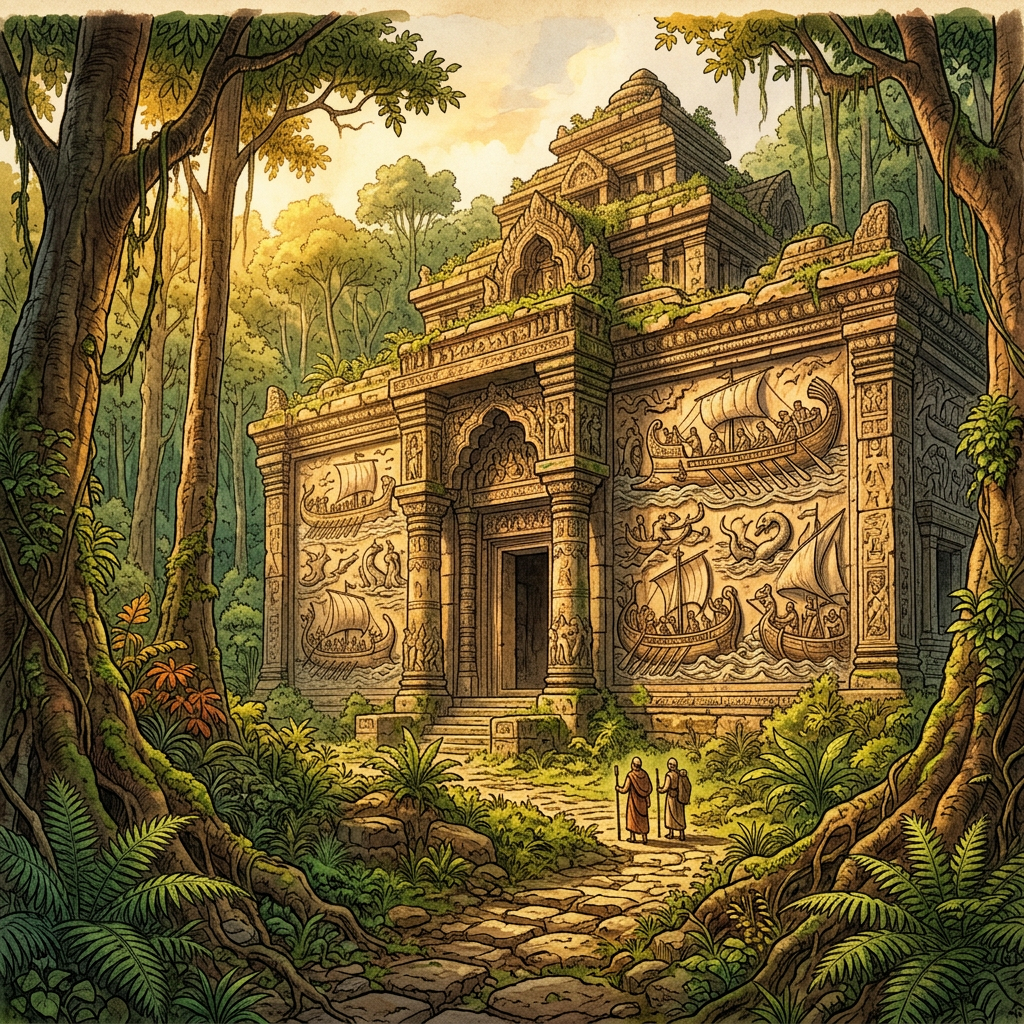
Archaeologists working in the dense forests of Mayurbhanj have identified a remarkably well-preserved 11th-century temple belonging to the Imperial Ganga dynasty. The structure is unique for its extensive series of naval friezes, which depict ancient maritime expeditions and ship designs previously unknown to historians of the period. This discovery suggests the Ganga dynasty's influence extended much further into naval commerce than previously evidenced by inland structures.
The temple's sanctum remains largely intact, featuring a monolithic chlorite deity. Local authorities and the Archaeological Survey of India (ASI) have begun documenting the site to prevent encroachment and looting. Experts believe the architectural style bridges the gap between early Kalinga designs and the later more complex structures found at Konark and Puri.