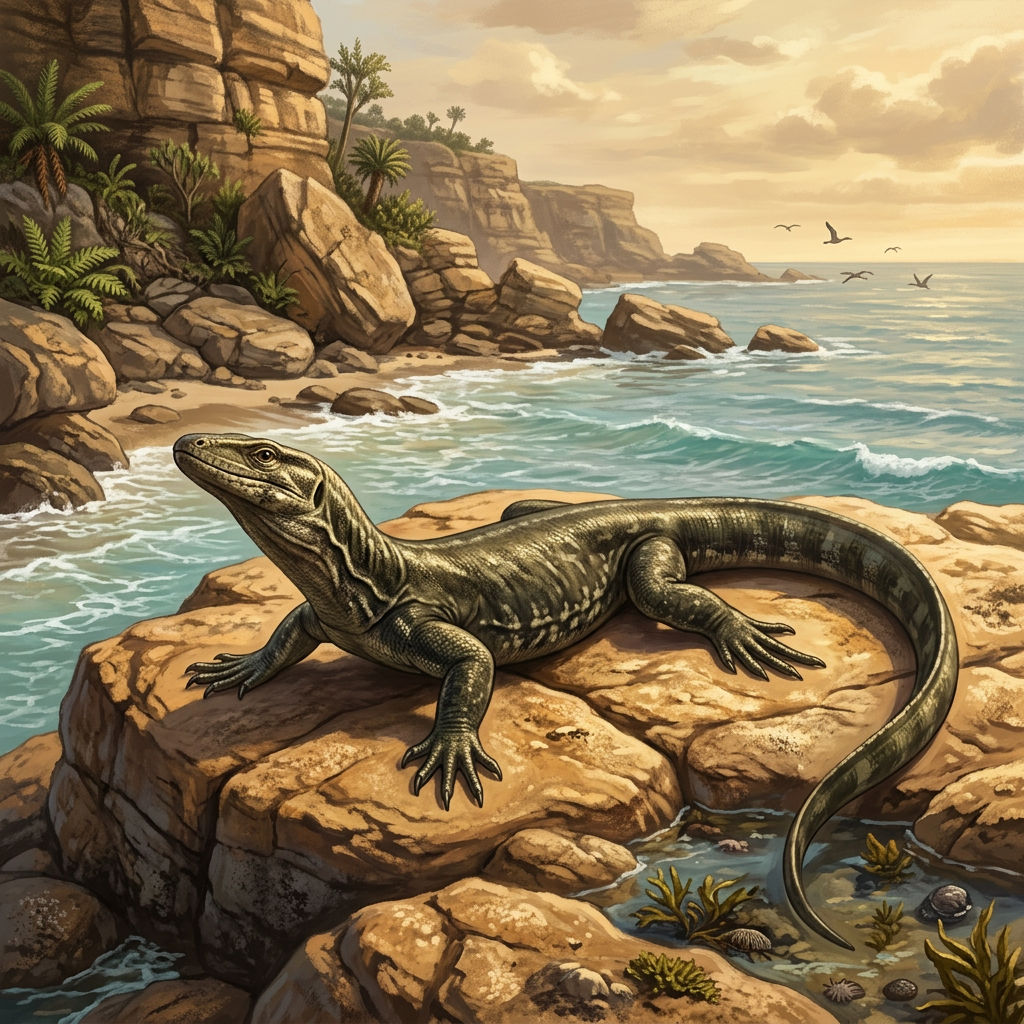
Paleontologists in the Waipara Greensand formation of New Zealand's South Island have announced the discovery of Mosasaurus waiparensis, a newly identified transitional species dubbed the 'Mosaloon.' This creature represents a critical 'missing link' in marine reptile evolution, possessing elongated limbs that suggest it was capable of both efficient swimming and limited movement on land. The fossil, which includes a nearly complete skull and pectoral girdle, dates to the Late Cretaceous period and provides the first physical evidence of how terrestrial lizards adapted to a fully aquatic lifestyle.
Analysis of the specimen's inner ear structure indicates that while it was highly adapted to hunting in shallow coastal waters, it retained the ability to hear airborne sounds. Researchers from the University of Canterbury noted that the discovery effectively fills a 10-million-year gap in the fossil record of the mosasaur lineage. This finding sheds light on the rapid diversification of marine predators following the extinction of ichthyosaurs and the changing ecological niches of the ancient Pacific Ocean.