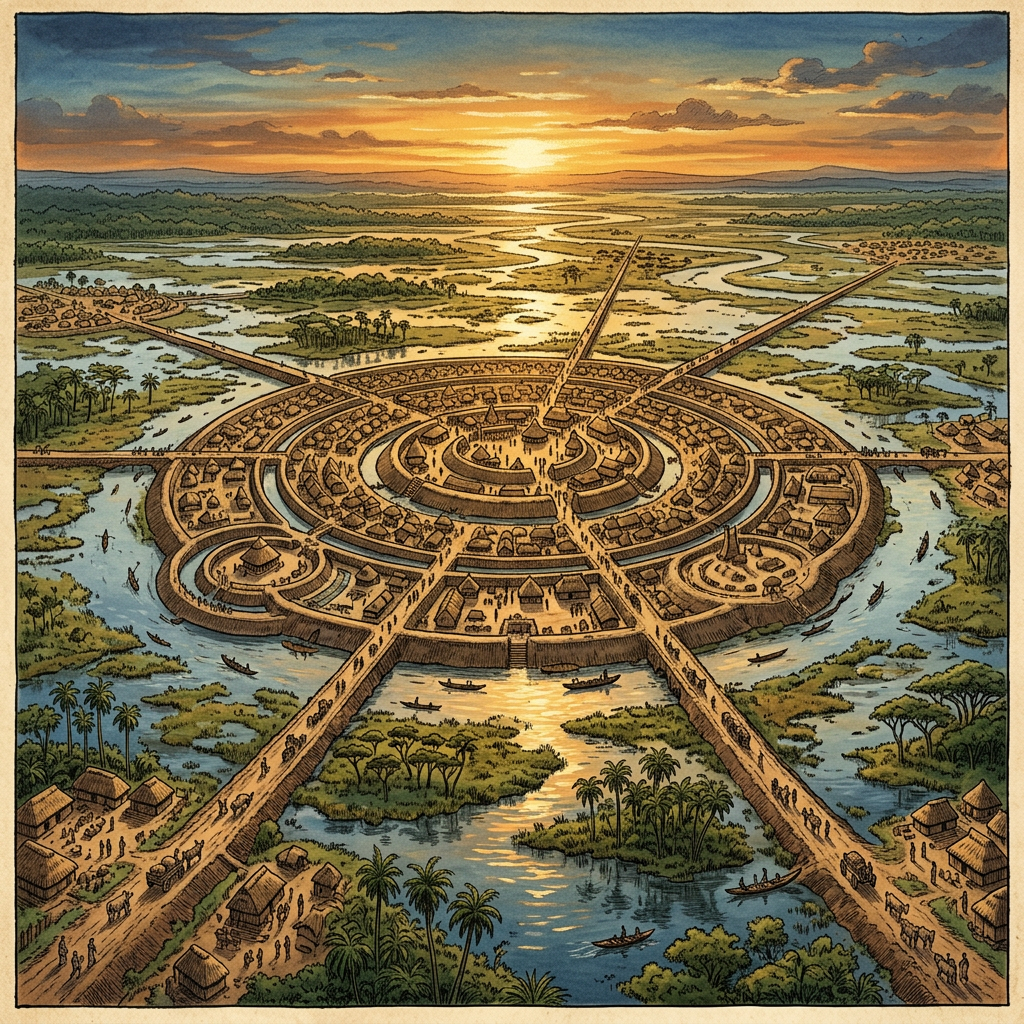
A high-definition LiDAR survey conducted over the Iténez region of the Bolivian Amazon has revealed the existence of a sprawling, previously unknown urban center belonging to the Baures culture. Spanning over 50 square kilometers, the 'Lake-Metropolis' features a complex system of radial causeways, artificial islands, and massive fish-weirs integrated into the natural wetland landscape. The data shows thousands of circular residential platforms surrounding a central ceremonial core dominated by three large earthen pyramids.
The discovery suggests that the Baures people developed a highly sophisticated form of 'amphibious urbanism' that allowed them to sustain a population of tens of thousands in a challenging seasonal environment. Archaeologists from the Amazonian Research Consortium believe this site served as a major regional trade hub, connecting the high Andes with the Atlantic river networks. This finding adds to the growing evidence that the pre-Columbian Amazon was a densely populated and technologically advanced landscape.