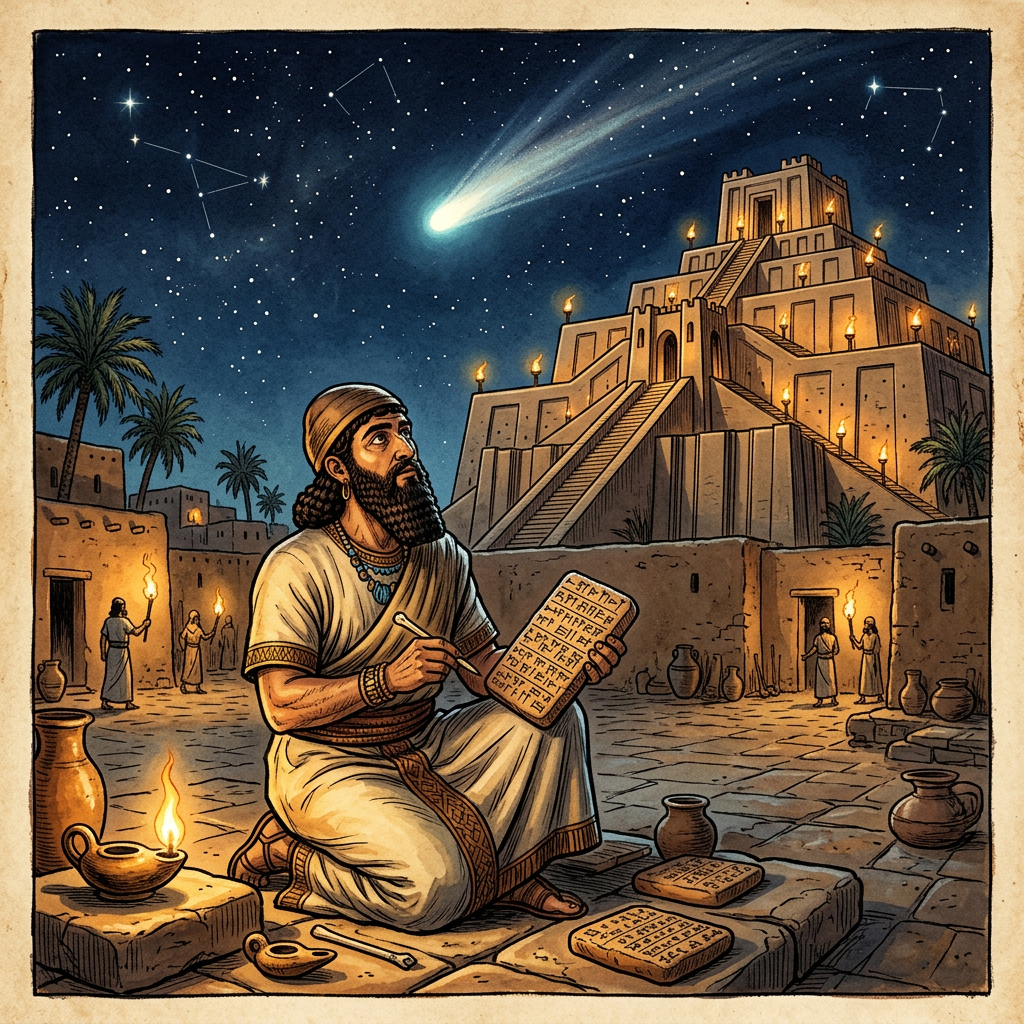
Archaeologists working in the sacred precinct of the Ancient City of Ur have discovered the foundations of a specialized structure identified as an early astronomical observatory. The building features a unique stepped platform with lines of sight specifically oriented toward the eastern horizon, designed for the systematic observation of the night sky by Sumerian priest-astronomers.
Beneath the floor of the observation room, a cache of over 200 cuneiform tablets was found, detailing a multi-generational registry of comet sightings and planetary conjunctions. These texts represent some of the earliest known attempts to predict the return of 'hairy stars' (comets), proving that Mesopotamian science was significantly more observational and less purely omen-based than previously thought.
One particularly significant tablet records the appearance of a bright comet that remained visible for ninety days, correlating with a period of massive flooding in the Tigris valley. This discovery highlights the role of the Enuma Anu Enlil tradition in its earliest formative stages, bridging the gap between ritual and empirical science.