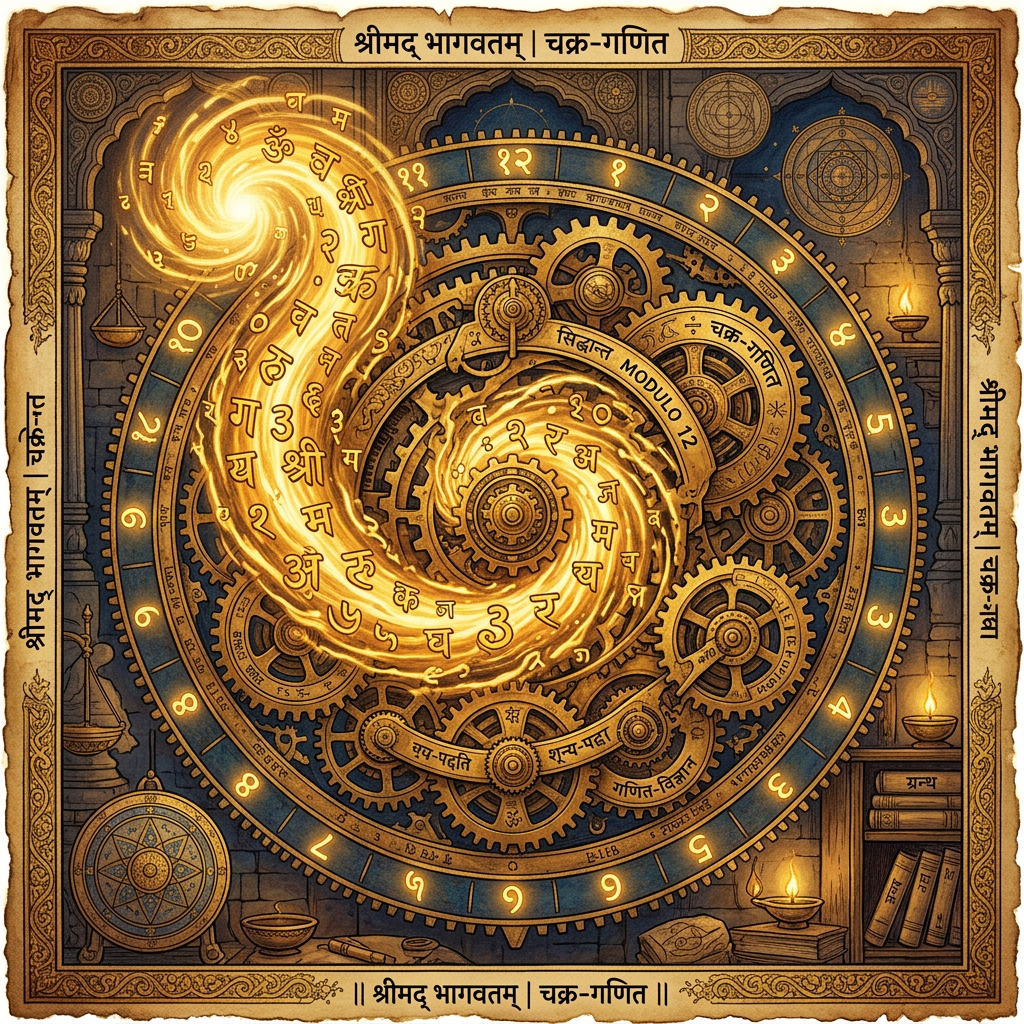
Scholars at the Institute of Mathematical Heritage have identified the earliest known conceptual framework for modular arithmetic within 11th-century Sanskrit logic manuscripts discovered near Kausambi. The texts, which involve the systematic classification of remainder-based sequences for cryptographic purposes, predate similar formalisms in the West by several centuries.
The analysis shows that the authors used recursive algorithms to solve complex congruences related to ritual timing and planetary cycles. This research highlights the deep integration of advanced mathematics within the Nyaya and Navya-Nyaya logical traditions, demonstrating that medieval Indian scholars were using abstract mathematical structures to formalize philosophical inquiry and data encryption.