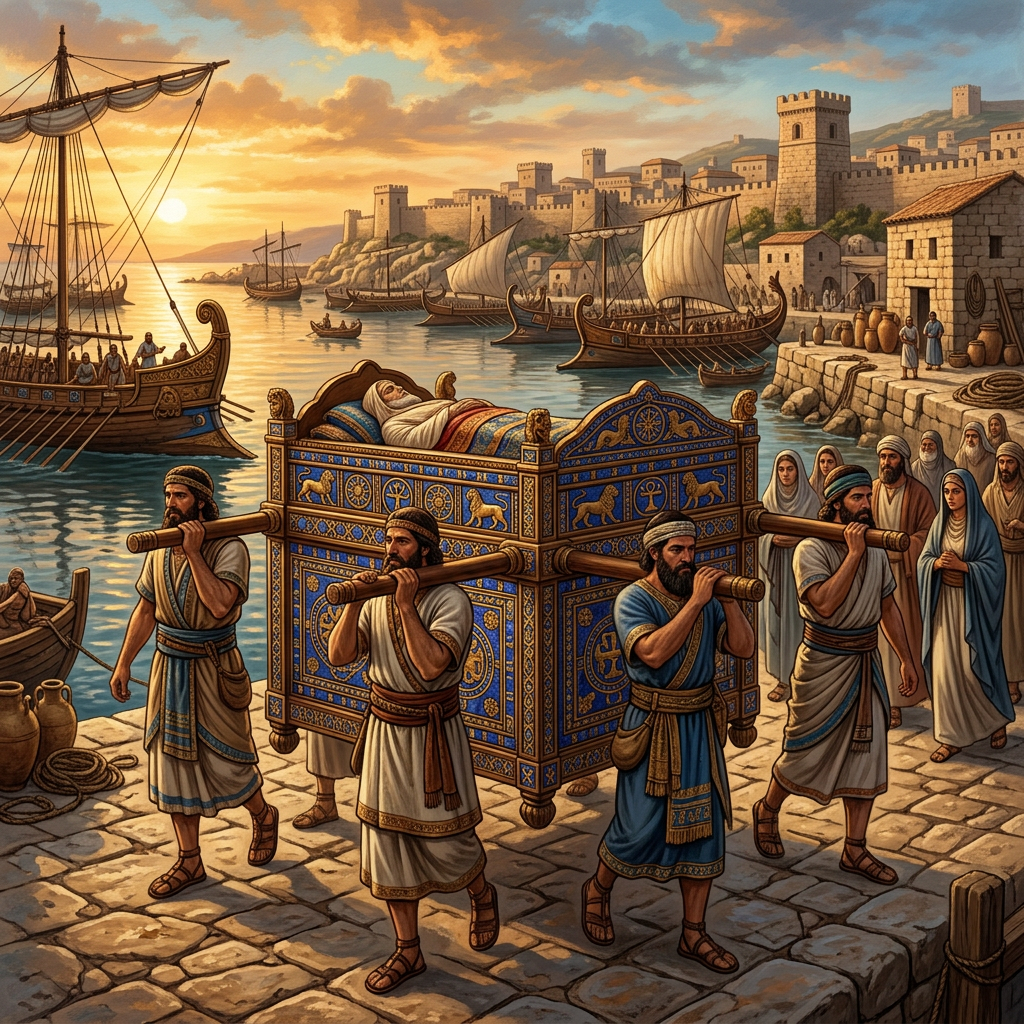
Archaeologists working near the ancient harbor of Sidon have unearthed the remains of two monumental processional biers made of Lebanese cedar and inlaid with Egyptian lapis lazuli. These structures, dating back to approximately 1500 BCE, appear to have been used to carry maritime deities during the 'Sailing-Greeting' festivals, which traditionally marked the beginning of the commercial shipping season in the Mediterranean.
The excavation team noted that the biers were found within a subterranean limestone vault, likely hidden to protect them during a period of conflict. The discovery provides the first physical evidence of the logistical scale of Phoenician harbor rituals, which were previously known only through fragmentary inscriptions. Chemical residue on the wood suggests the biers were frequently treated with a mixture of myrrh and pine resin to maintain their luster and aromatic presence during long public parades.