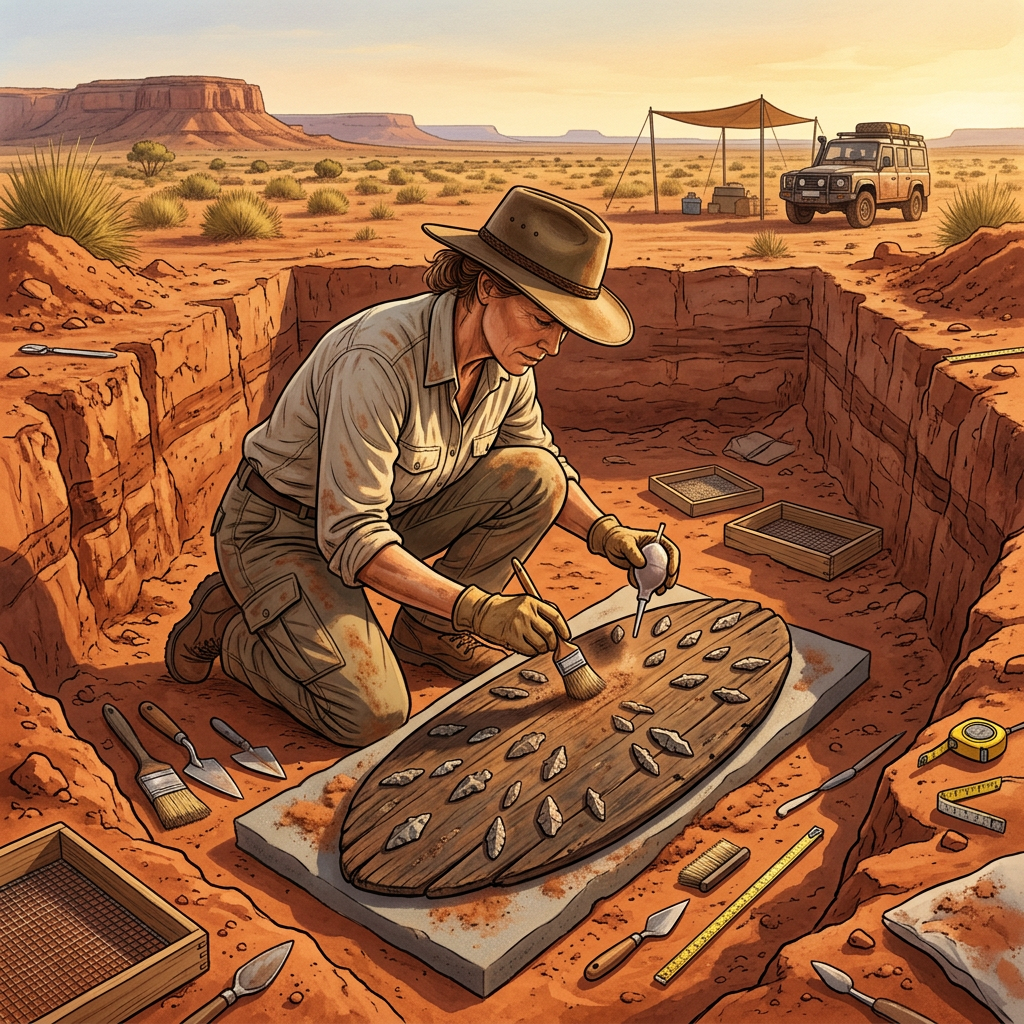
New excavations in the Lake Eyre Basin of South Australia have uncovered extraordinary evidence of ancient ritual continuity. Archaeologists found several preserved wooden 'shields' embedded with sharp flint flakes, which, when struck, produce a distinctive metallic ringing sound. These objects were found in a layer of sediment dating back 12,000 years, making them some of the oldest known ritual acoustic instruments in the world.
Anthropologists hypothesize that these shields were used in 'Thunder-Calling' festivals, where participants rhythmically struck the flint to mimic the sound of approaching storms. During periods of extreme drought, these ceremonies were vital for community cohesion and ancestral connection. The discovery challenges previous timelines of Australian desert occupation and provides a profound link to the living traditions of modern First Nations people who still maintain spiritual stewardship over the basin's waters.