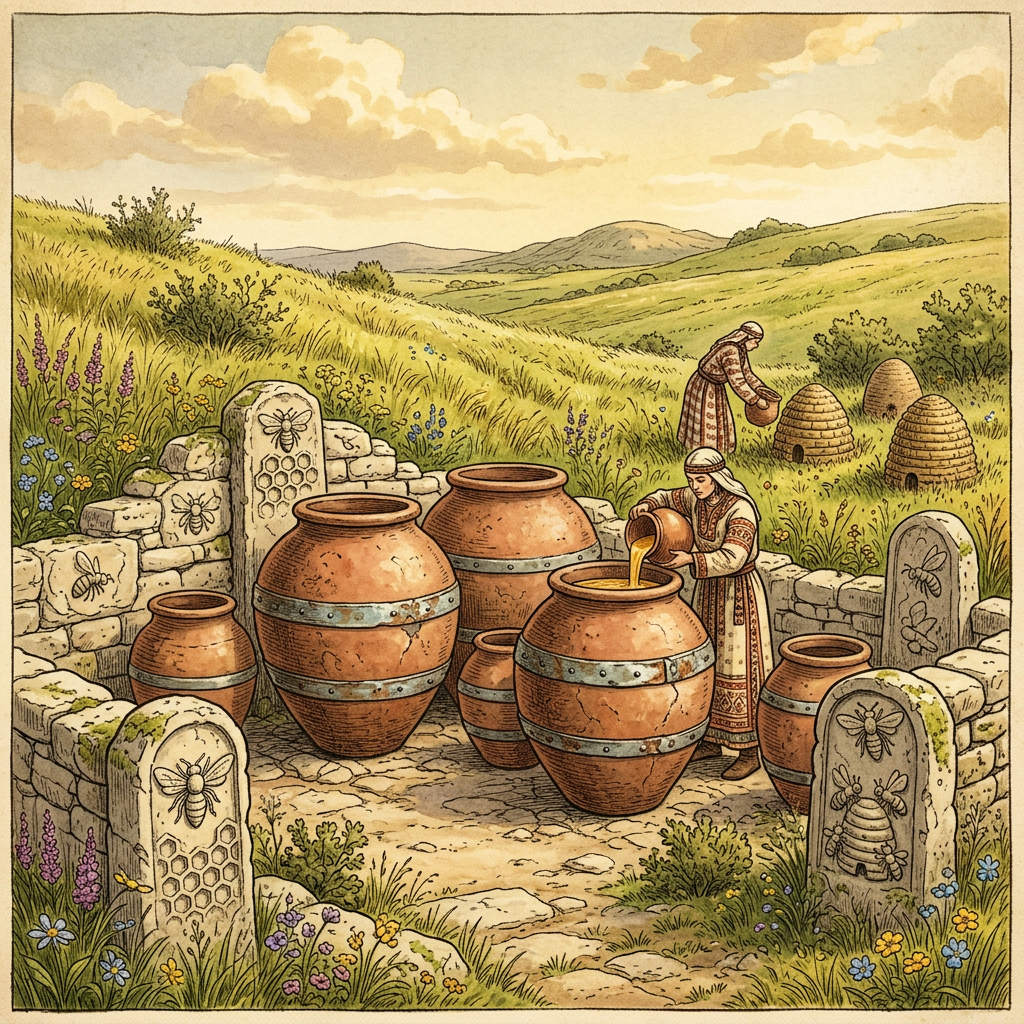
A team of environmental archaeologists in the Southern Urals has discovered large, 'tin-bound' ceramic vats used for the fermentation of honey-based beverages. Dated to the middle of the second millennium BCE, these vats were found in a specially constructed timber-lined pit. Analysis of the interior residue confirmed a mixture of wild honey, juniper berries, and local herbs, creating a potent mead-like drink used for ritual consumption.
Researchers believe these vats were the centerpiece of 'First-Bee' spring festivals, where early pastoralist communities celebrated the return of pollinating insects and the rejuvenation of the grasslands. The use of tin to reinforce the vessels suggests a high degree of technological sophistication and value placed on these communal rituals. The site also contained several carved stone bee figurines, indicating that the festival included specific invocations to protect hive populations from predators.