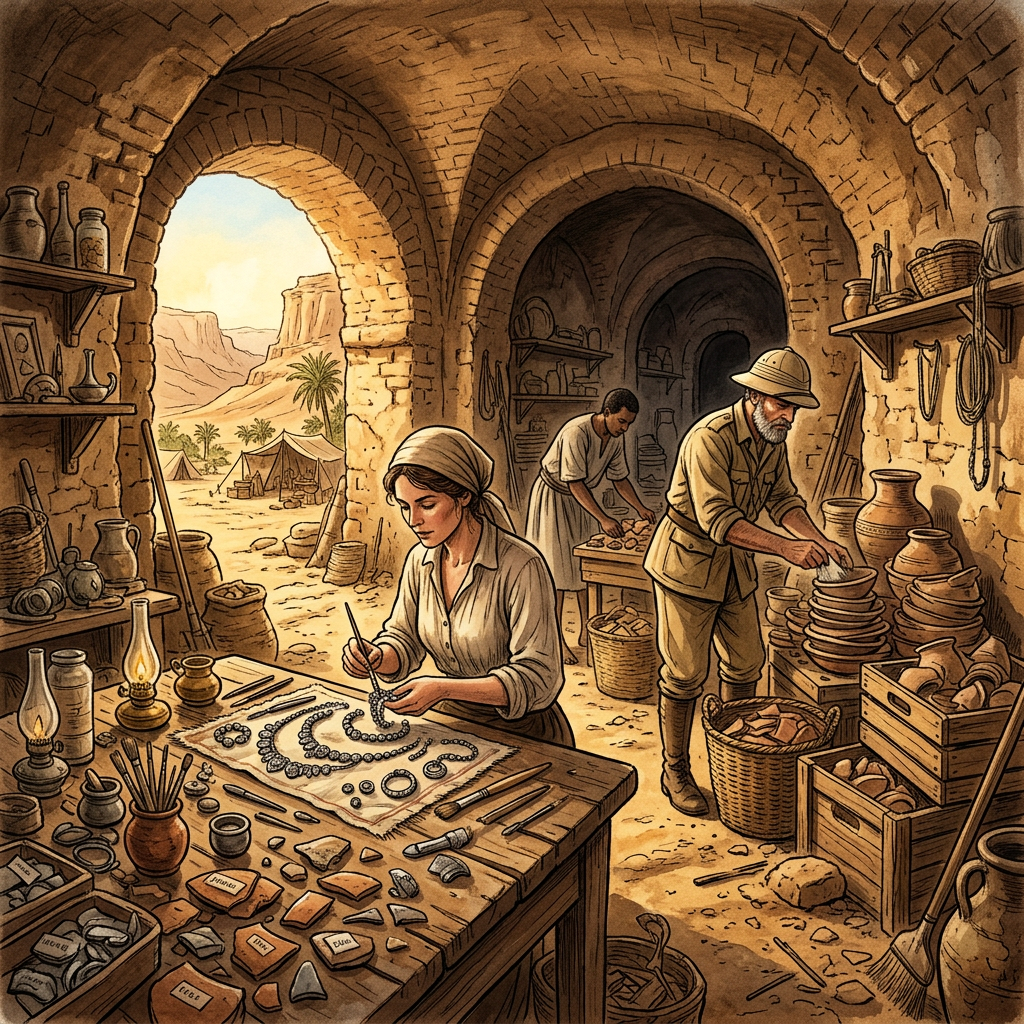
Archaeologists working in Egypt’s Dakhla Oasis have announced the discovery of a remarkably well-preserved administrative complex and treasury dating to the 13th Dynasty. The site, located deep within the Western Desert, appears to have served as a vital regional hub for managing trade routes between the Nile Valley and sub-Saharan Africa. The discovery is significant as it provides rare evidence of central government presence in the oases during the politically turbulent Second Intermediate Period.
Inside the vaulted mud-brick chambers, the mission uncovered a cache of silver jewelry, including heavy anklets and intricate amulets, alongside hundreds of administrative ostraca (inscribed pottery shards). These records detail the taxation of luxury goods, including ivory and exotic oils, passing through the oasis. The treasury is remarkably intact, having been buried by sand centuries ago, which protected the organic remains and fragile silver artifacts from the elements and ancient looters alike.