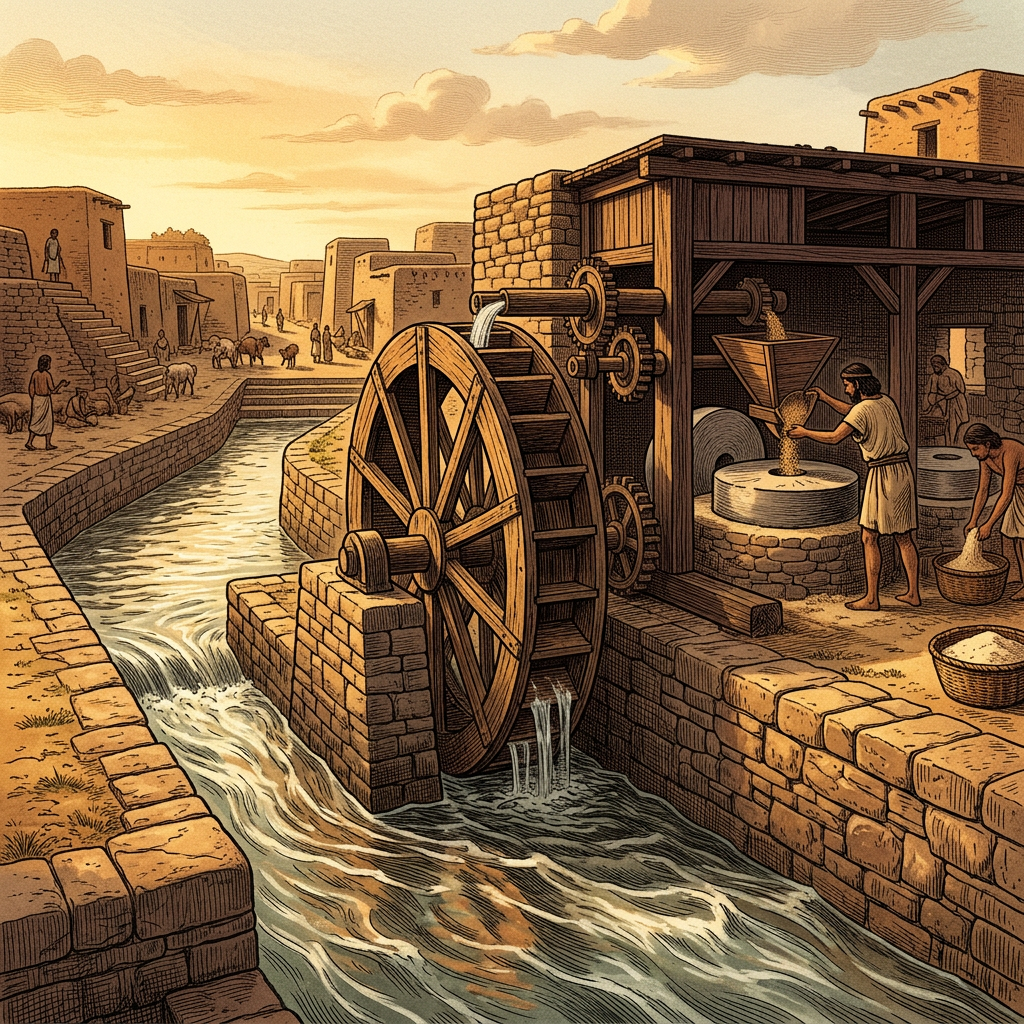
A new excavation on the northern periphery of Dholavira in the Rann of Kutch has revealed a groundbreaking engineering feat of the Indus Valley Civilization. Archaeologists have identified a specialized industrial sector that utilized the marine flow of the tidal Rann to power heavy wooden waterwheels. This facility appears to have been used for the large-scale grinding of grain, marking the earliest known use of tidal energy for mechanical processing in the ancient world.
The structure consists of a series of stone-lined channels designed to funnel the incoming tide into a central chamber where remnants of massive basalt grinding stones and wooden axle-sockets were found. Preliminary analysis suggests the Harappans synchronized their milling operations with the lunar cycle to maximize power. This discovery challenges existing theories about ancient energy use and highlights the sophisticated hydro-mechanical knowledge of the Harappan urban planners.