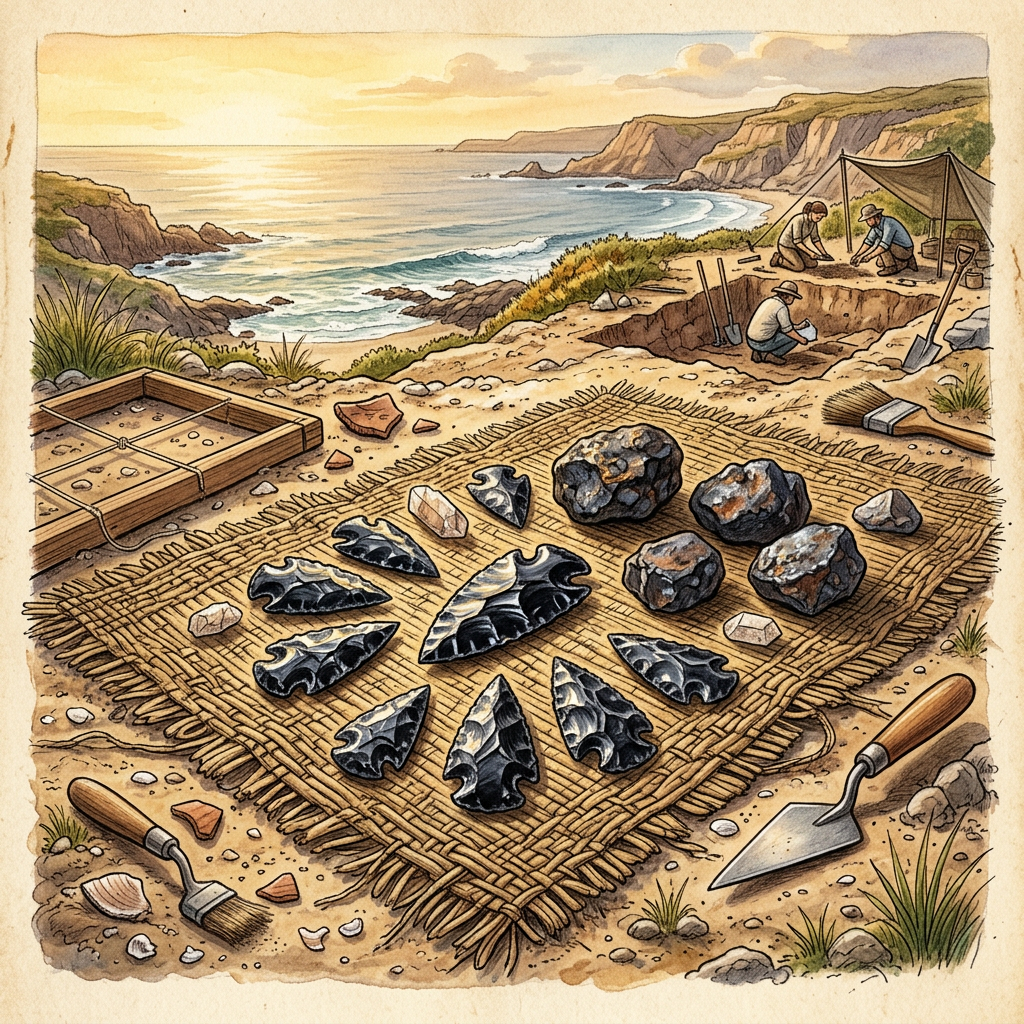
Archaeologists utilizing advanced geochemical fingerprinting have uncovered evidence of the 'Obsidian and Magnetite' Seaway, a sophisticated maritime trade network that connected the Cycladic islands to the southern coast of the Black Sea during the Neolithic period. The study, published in the Journal of Archaeological Science, reveals that obsidian from the island of Melos was exchanged for magnetite-rich iron ores found in ancient Anatolia as early as 4000 BCE.
This discovery challenges previous assumptions about the range of early maritime navigation, suggesting that Neolithic sailors utilized advanced knowledge of seasonal currents to bridge the Aegean and the Euxine. The presence of these materials in distant settlements indicates a highly organized system of long-distance resource management that predates the established Bronze Age trade routes by over a millennium.