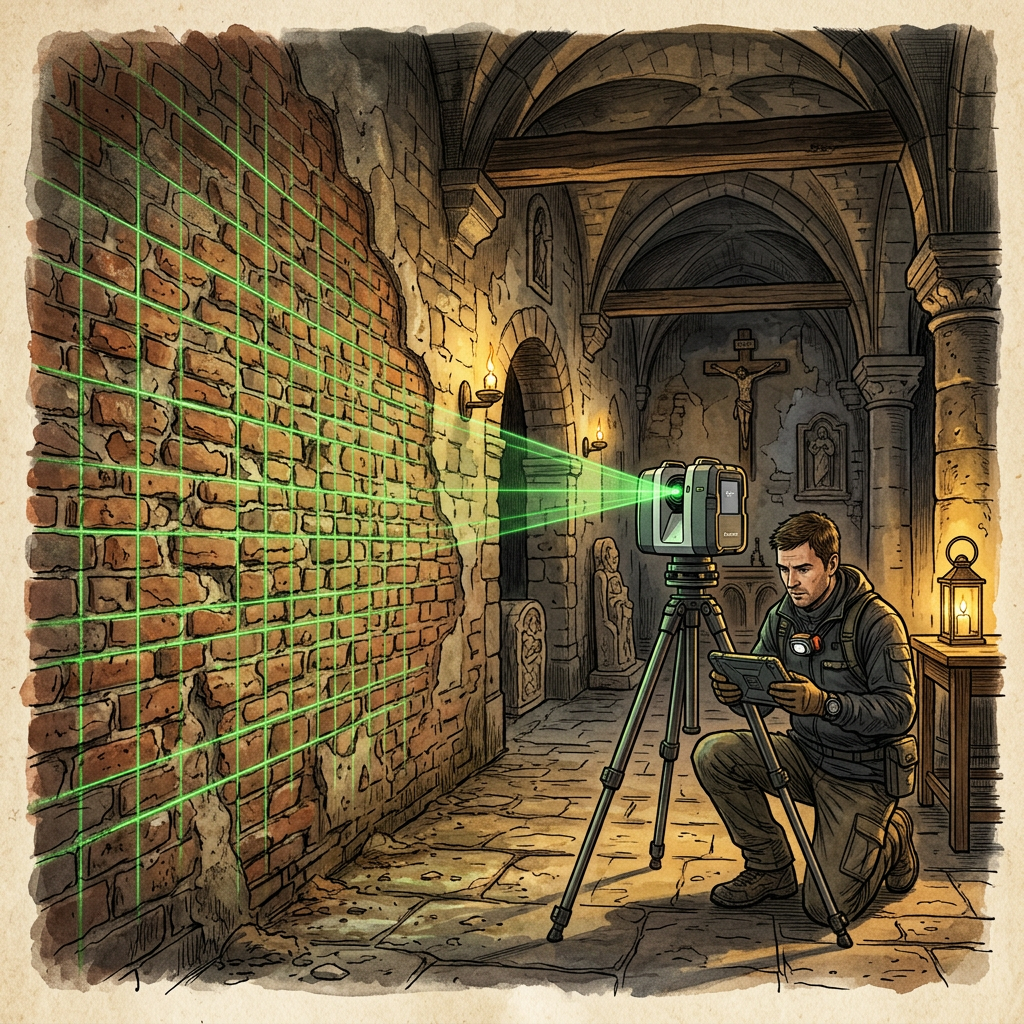
Scientists specializing in heritage technology have successfully used non-invasive Photo-Acoustic Spectroscopy to map hidden 12th-century murals at the Somapura Mahavihara in Bangladesh. The technology, which detects the subtle acoustic waves generated by laser-heated pigments, allowed researchers to visualize layers of Buddhist iconography that had been obscured by centuries of lime-wash and structural reinforcements.
The newly revealed artworks depict complex scenes from the Jataka tales and are executed in the classic Pala-era style, known for its fluid lines and rich earth tones. This discovery marks the first time that the internal walls of the central stupa have been analyzed without physical sampling, providing a new blueprint for the conservation of similar earthen and brick monuments across South Asia without risking the fragile original surfaces.