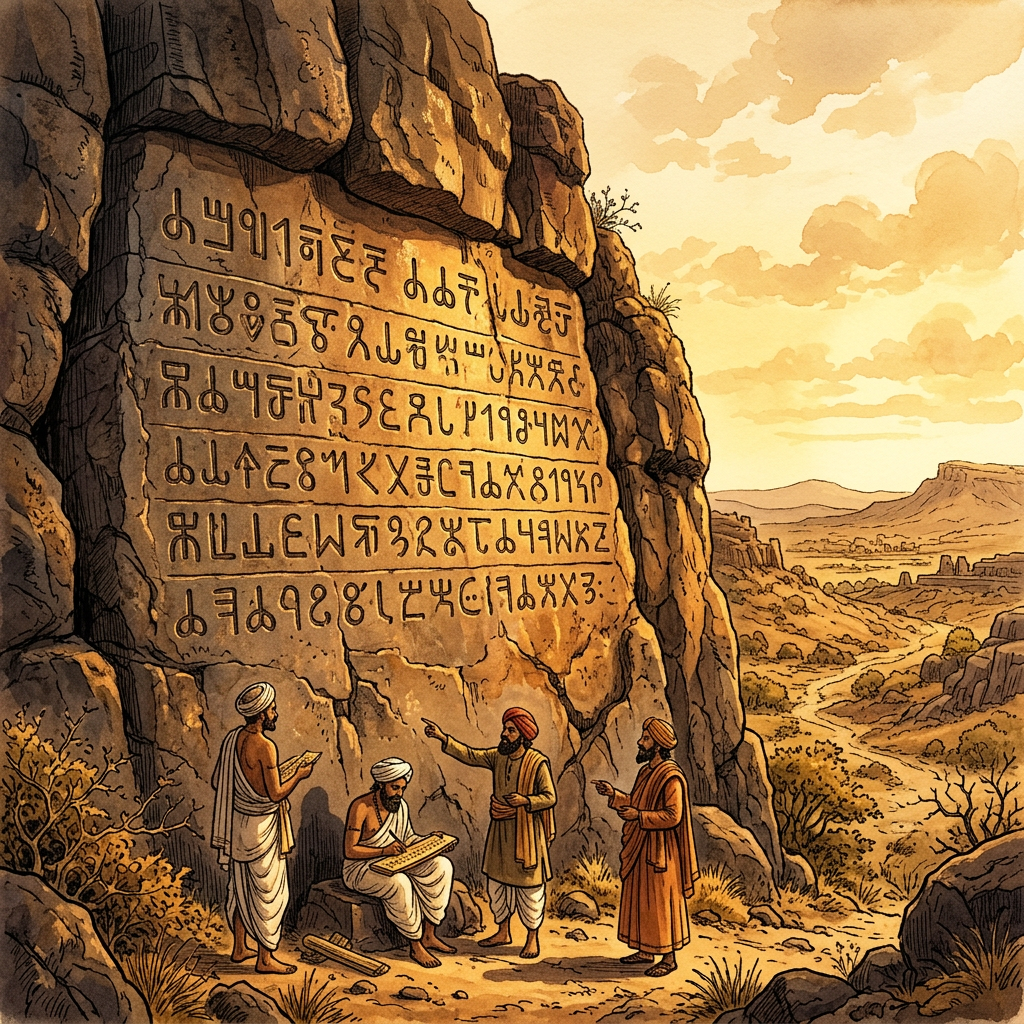
A series of previously unknown rock-cut inscriptions dating to the 4th century BCE has been discovered near the Ajanta hinterland in Maharashtra. These inscriptions, collectively referred to as the 'Nishparigraha' edicts, provide a detailed philosophical defense of Aparigraha (non-possession) not just as a religious vow, but as a foundational principle for social and economic stability. The text argues that excessive accumulation leads to "metaphysical friction," disrupting the natural flow of cosmic order known as Rta.
Unlike the Ashokan edicts which focus on administrative dharma, these earlier inscriptions are purely philosophical in tone, structured as a dialogue between a master and a student regarding the nature of "true ownership." Researchers believe these inscriptions may belong to a pre-Mauryan community of Vedic ascetics who were influential in the region's intellectual development. The find significantly pushes back the timeline for organized philosophical discourse on voluntary simplicity in Western India.