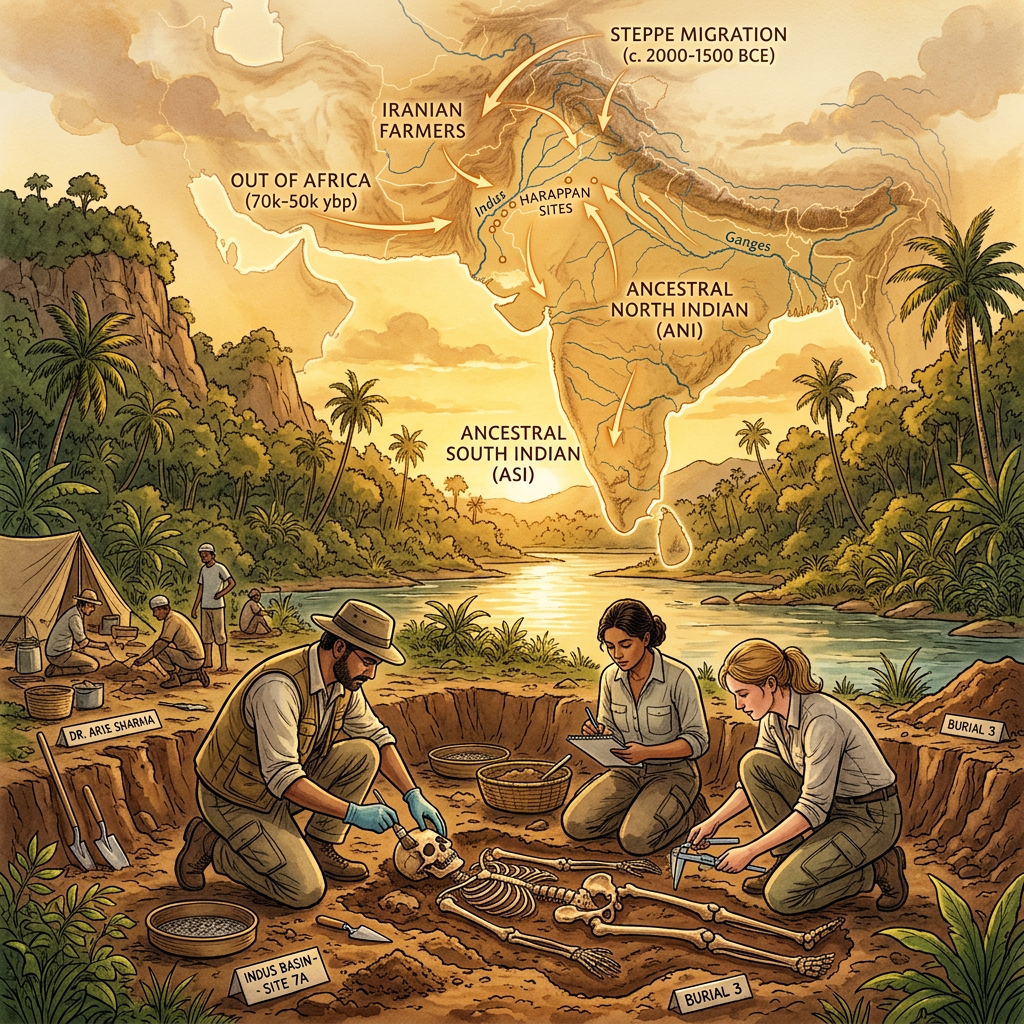
An international team of geneticists has published a comprehensive analysis of 7,000-year-old human remains excavated from the Periyar Basin in Kerala. The study, appearing in Cell Genomics, identifies the earliest known genetic markers for resistance to endemic tropical fluvial parasites among the Neolithic inhabitants of the region.
The research reveals that these early settlers underwent rapid selective pressure, developing a unique immunological profile that allowed them to thrive in the humid, riverine environment of the southwestern coast. These findings underscore the role of localized environmental stressors in shaping the genetic landscape of prehistoric South India and suggest the existence of a robust, permanent population that mastered the challenges of tropical deltaic ecosystems.