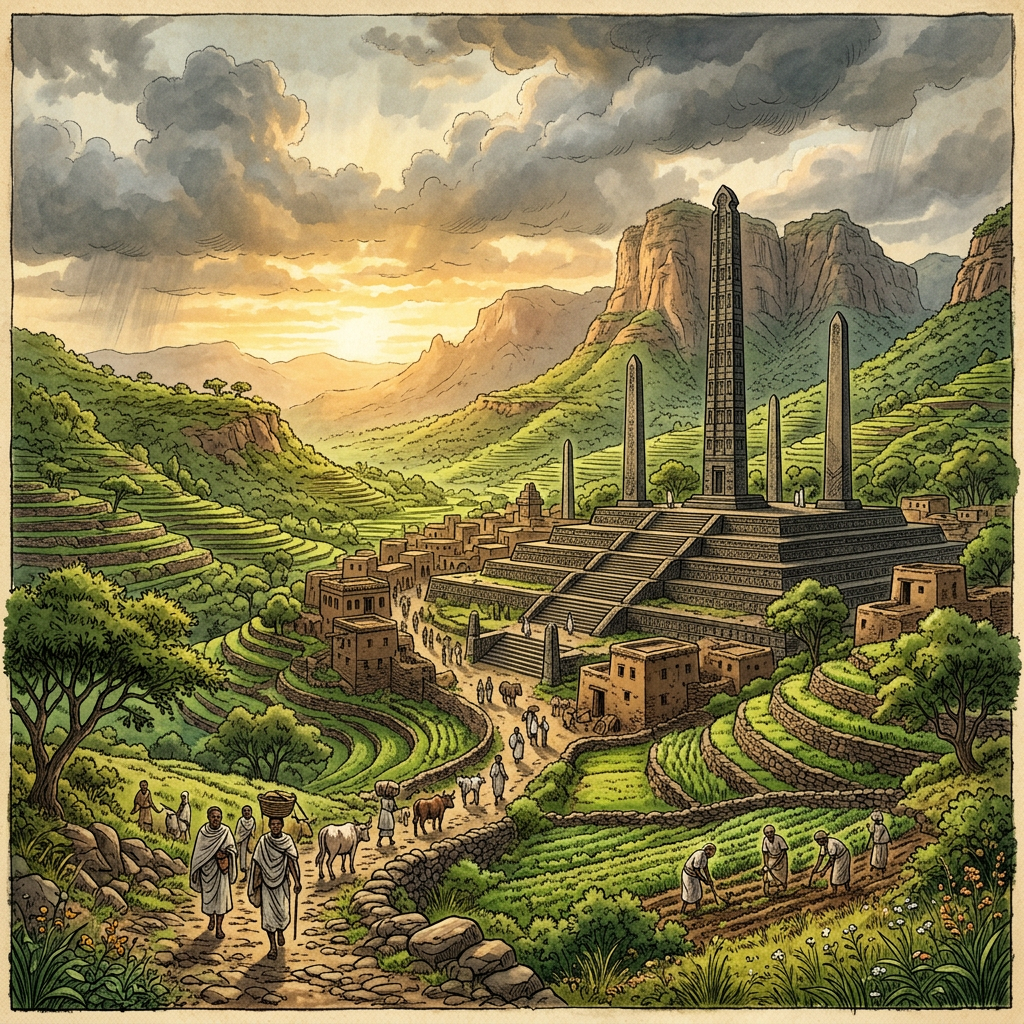
A new climate archaeology study suggests that the expansion of the Aksumite Empire was fueled by a century of unexpectedly high rainfall along the Red Sea coast. By analyzing fossilized pollen and sediment layers from the Ethiopian Highlands, researchers found evidence of a "green window" between 300 and 400 CE that allowed for surplus grain production and the growth of significant urban centers.
This period of enhanced monsoon activity provided the environmental stability necessary for Aksum to dominate ancient trade routes between the Roman Empire and India. The study highlights how subtle shifts in local climate patterns can dictate the rise and fall of civilizations, contrasting this era of prosperity with later periods of drought that contributed to the empire's eventual decline.