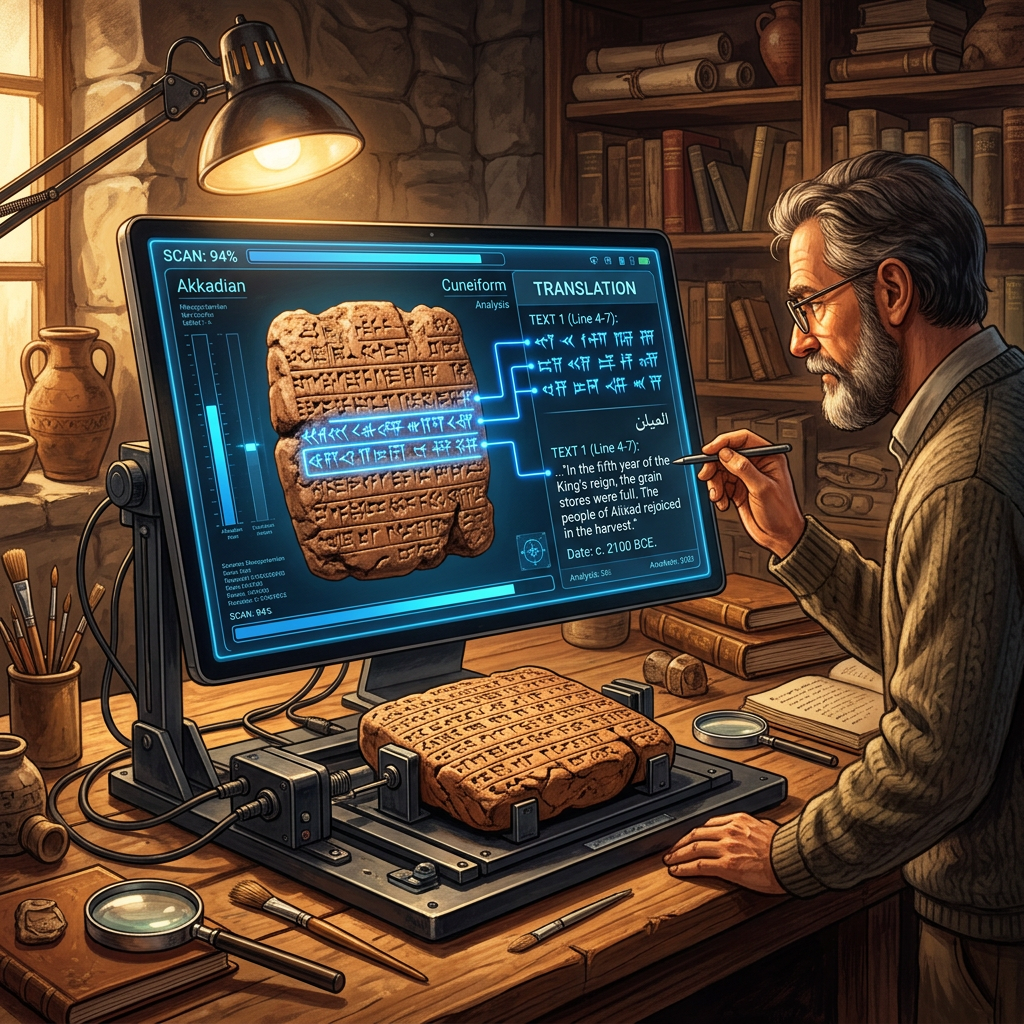
Using advanced multi-spectral imaging and AI-driven linguistic modeling, researchers at the Kurukshetra University have successfully deciphered a cache of terracotta tablets found at an early Iron Age site. The tablets, inscribed with a proto-Brahmi script, contain a treatise titled Dharma-Vritti-Niyama, which translates to the 'Rules for the Sustainable Practice of Virtue.' The text dates back to the 4th century BCE, predating the formalization of major Smriti texts.
The tablets outline a secular ethical framework based on the concept of 'moral momentum,' suggesting that virtue is not an inherent trait but a habit cultivated through consistent, small-scale social interactions. This discovery challenges the view that early Vedic ethics were purely ritualistic, showing instead a robust rationalist tradition focused on social harmony and psychological well-being. The findings are expected to significantly alter the chronology of the development of Indian ethical philosophy.