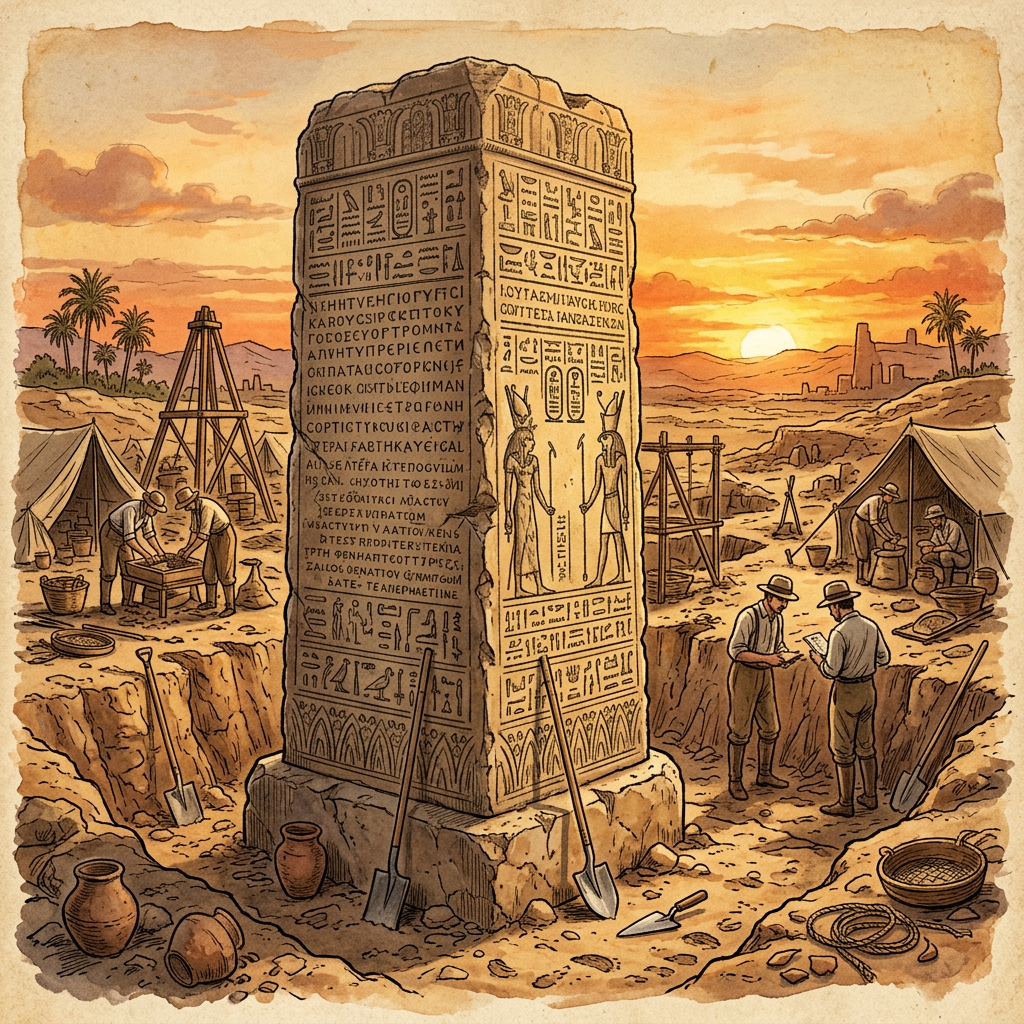
Excavations led by the Archaeological Survey of India (ASI) near the Narmada River have revealed a series of stone stelae inscribed with 6th-century BCE aphorisms. The inscriptions, titled Rta-Karma-Sambandha, focus on the intricate relationship between cosmic order (Rta) and individual action (Karma). This find is being hailed as one of the earliest epigraphical records of the law of causality in a non-ritualistic context.
The text argues that moral transgressions are not merely social offenses but 'distortions of the physical landscape,' suggesting an early naturalist ethics that integrated human behavior with environmental health. Experts note that the philosophical depth of these inscriptions suggests a highly sophisticated school of thought that existed concurrently with the early Upanishads. The site is now being considered for a major preservation project to study its links to ancient riverine civilizations.