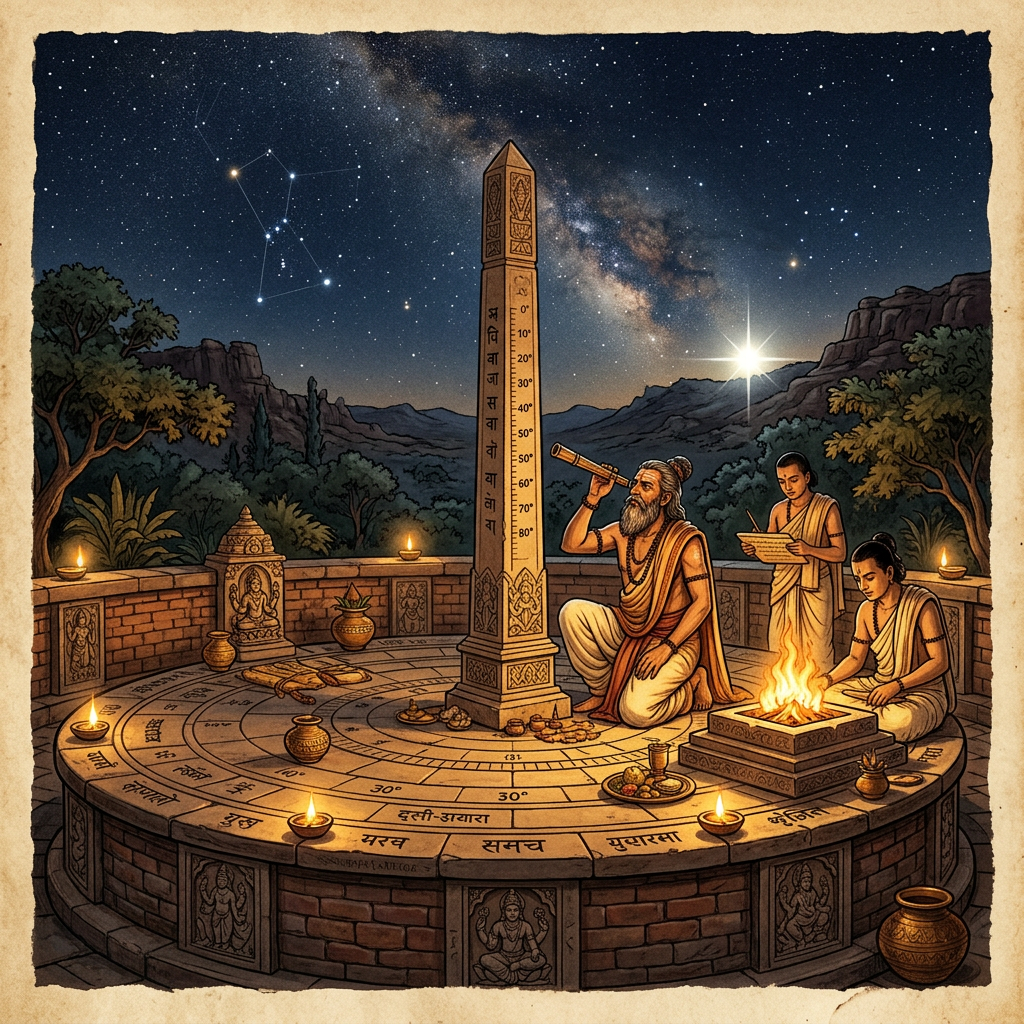
A comprehensive archaeoastronomical study has correlated specific ritual descriptions in the Kathaka Samhita, an ancient Vedic text, with the heliacal rising of the star Canopus (Agastya) as it would have appeared in the sky over North India in 1750 BCE. By applying 3D stellar precession models to the text's description of 'the star that stills the waters,' researchers have validated the precision of 2nd millennium BCE solar-sidereal calendars.
The findings indicate that the authors of the Kathaka Samhita were conducting systematic, multi-generational observations of the southern sky to calibrate their agricultural and ritual cycles. This study reinforces the theory that Vedic astronomy was an observational science rooted in the precise tracking of stellar positions, providing a crucial chronological anchor for the cultural transition between the Late Harappan and Early Vedic periods.