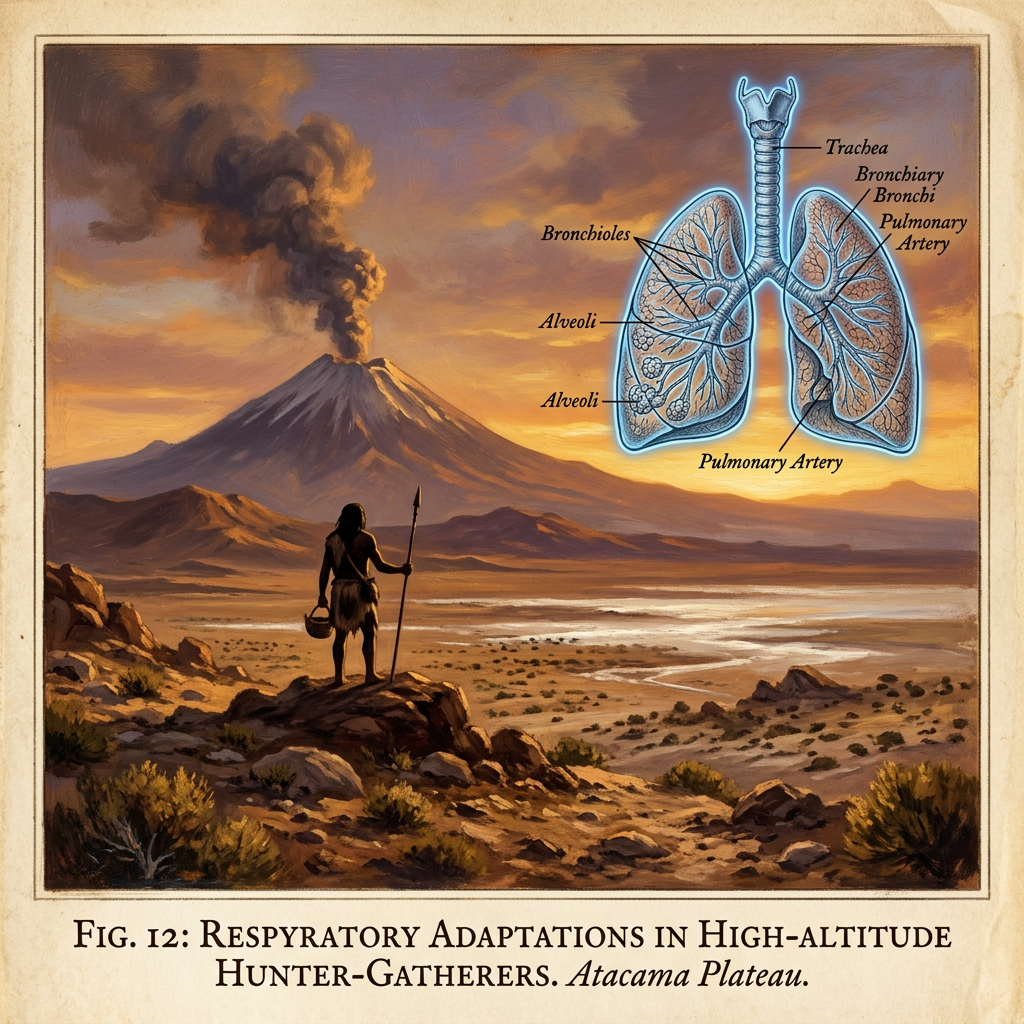
New anthropological research led by the University of Santiago has identified a distinctive genetic adaptation in 13,000-year-old remains from the Puna de Atacama region of the Andes. The study, published in The Journal of Human Evolution, reveals that these early settlers possessed a unique variant of the MUC5B gene, which enhanced the efficiency of their respiratory mucus in clearing volcanic ash and fine mineral dust prevalent in the high-altitude volcanic plateau.
This genomic selection represents the earliest documented human adaptation to airborne mineral pollutants. The researchers argue that this trait was essential for the survival of Paleo-Indian groups during a period of intense volcanic activity in the Central Andes, allowing them to occupy high-altitude niches that would have been biologically inhospitable to unadapted populations.