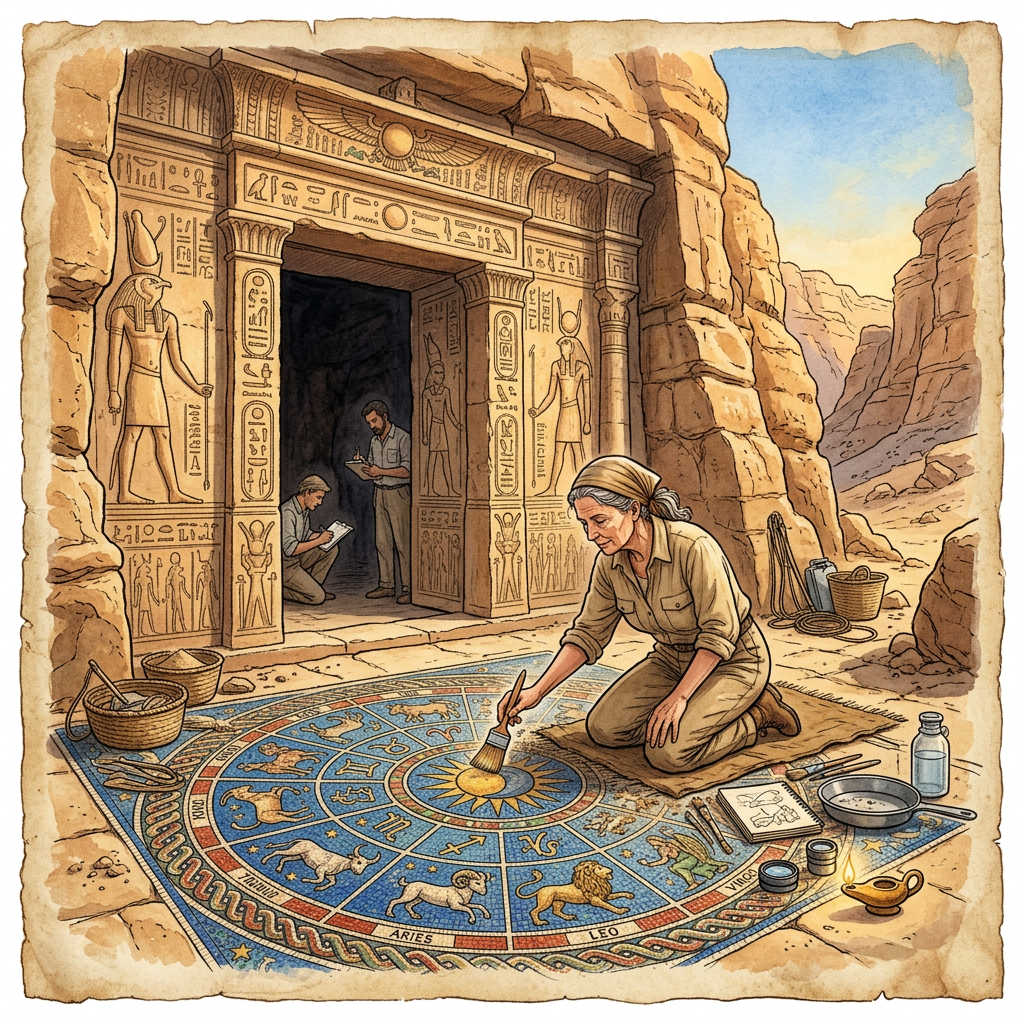
A survey in the remote Wadi Araba region of Jordan has revealed a 2nd-century BCE Nabataean sanctuary dedicated to stellar deities. The site, known as the 'Temple of the Constellations,' contains a perfectly preserved floor mosaic illustrating the Zodiac and planetary movements as perceived by ancient desert navigators, marking one of the most complete astronomical records of its era.
The temple's entrance is aligned with the rising of the star Canopus, which served as a critical navigational marker for spice caravans traveling toward Petra. Researchers highlighted the cross-cultural artistic influence seen in the temple, which blends Hellenistic geometric precision with traditional Nabataean rock-cut aesthetics, demonstrating the cosmopolitan nature of the early Arab kingdom.