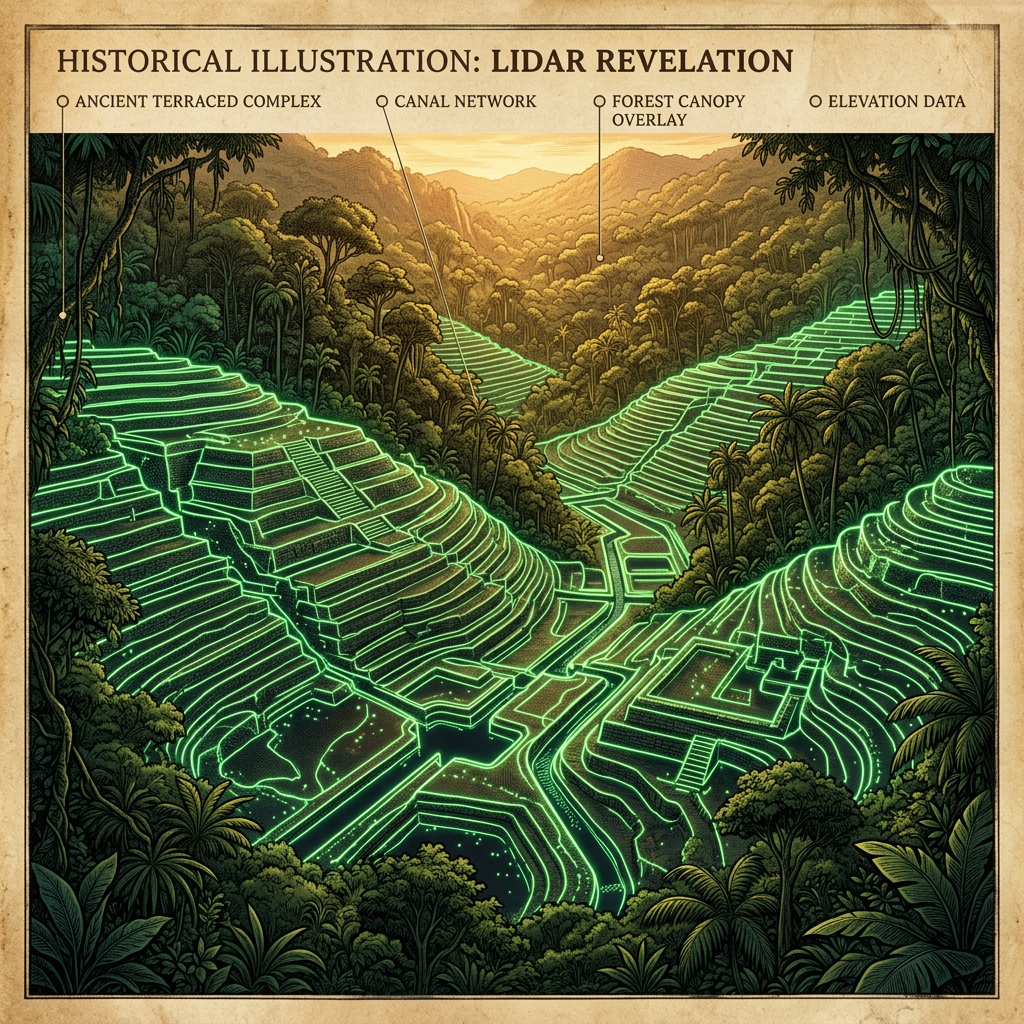
A high-resolution LiDAR survey over the dense jungles of Campeche, Mexico, has identified a sophisticated vertical hydroponic system used by the ancient Maya during the Late Classic period. The mapping reveals thousands of terraced stone platforms integrated into a complex network of gravity-fed aqueducts, which allowed for intensive crop cultivation on steep hillsides that were previously thought to be agriculturally unproductive.
Archaeologists believe these "aerial paddies" were specifically engineered for high-value crops, such as medicinal herbs or specialized ritual maize varieties, that required constant moisture. This discovery challenges long-held assumptions about Maya agricultural limitations and demonstrates a masterful understanding of hydraulic pressure and nutrient-rich water distribution in tropical environments.