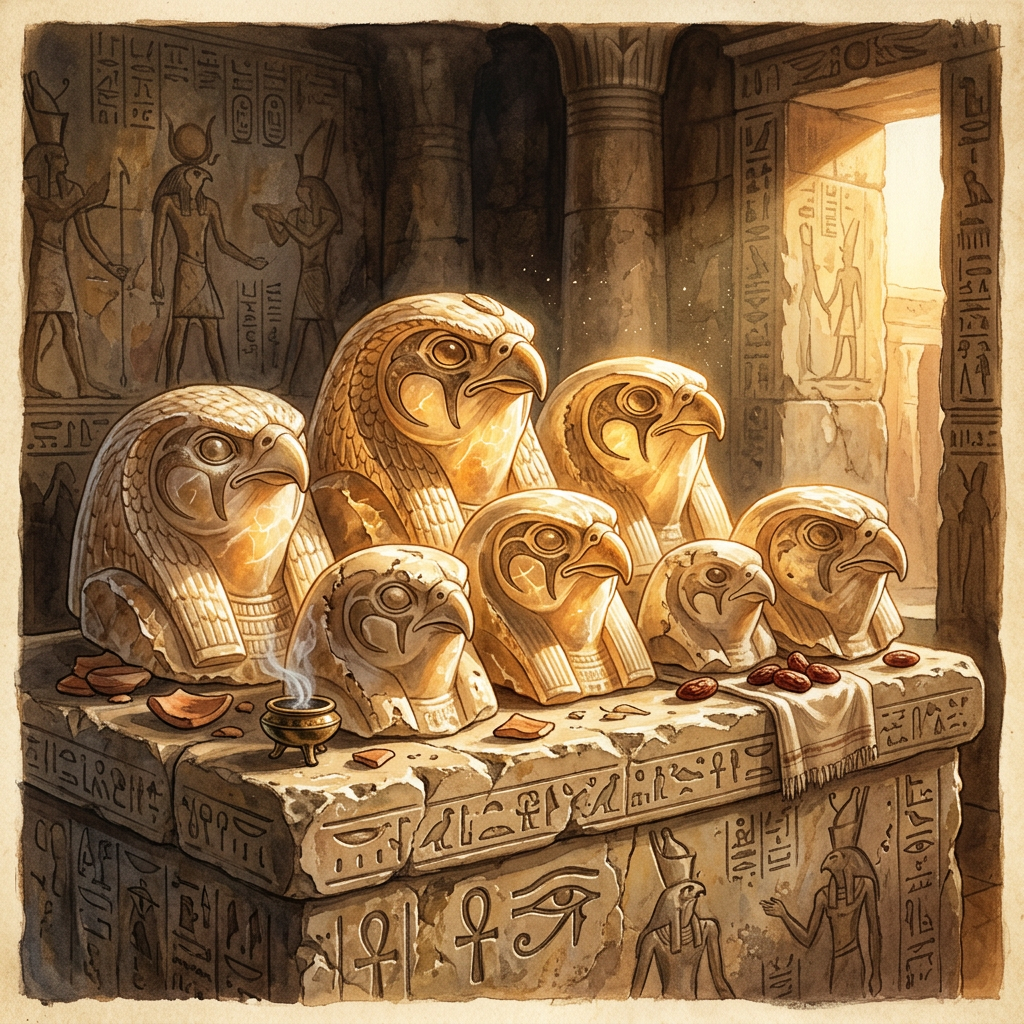
Archaeologists working in the Fezzan region of southwestern Libya have unearthed a cache of remarkably preserved alabaster masks carved in the likeness of falcons. These artifacts, dating back to approximately 1500 BCE, are believed to be the earliest evidence of the 'Sky-Path' festivals celebrated by the proto-Garamantes civilization. The masks were found arranged in a circular formation around a central limestone altar, suggesting a highly organized ceremonial practice focused on avian deities and celestial navigation.
Preliminary analysis of the site reveals that the ritual space was aligned with the heliacal rising of Sirius, a key marker for seasonal transitions in the Sahara. Researchers found traces of burnt ostrich feathers and aromatic resins within the altar's crevices, indicating that the festival involved sensory-rich performances intended to mirror the flight of raptors across the desert sky. This discovery challenges previous assumptions about the complexity of early Saharan religious structures prior to the formal establishment of the Garamantian Empire.