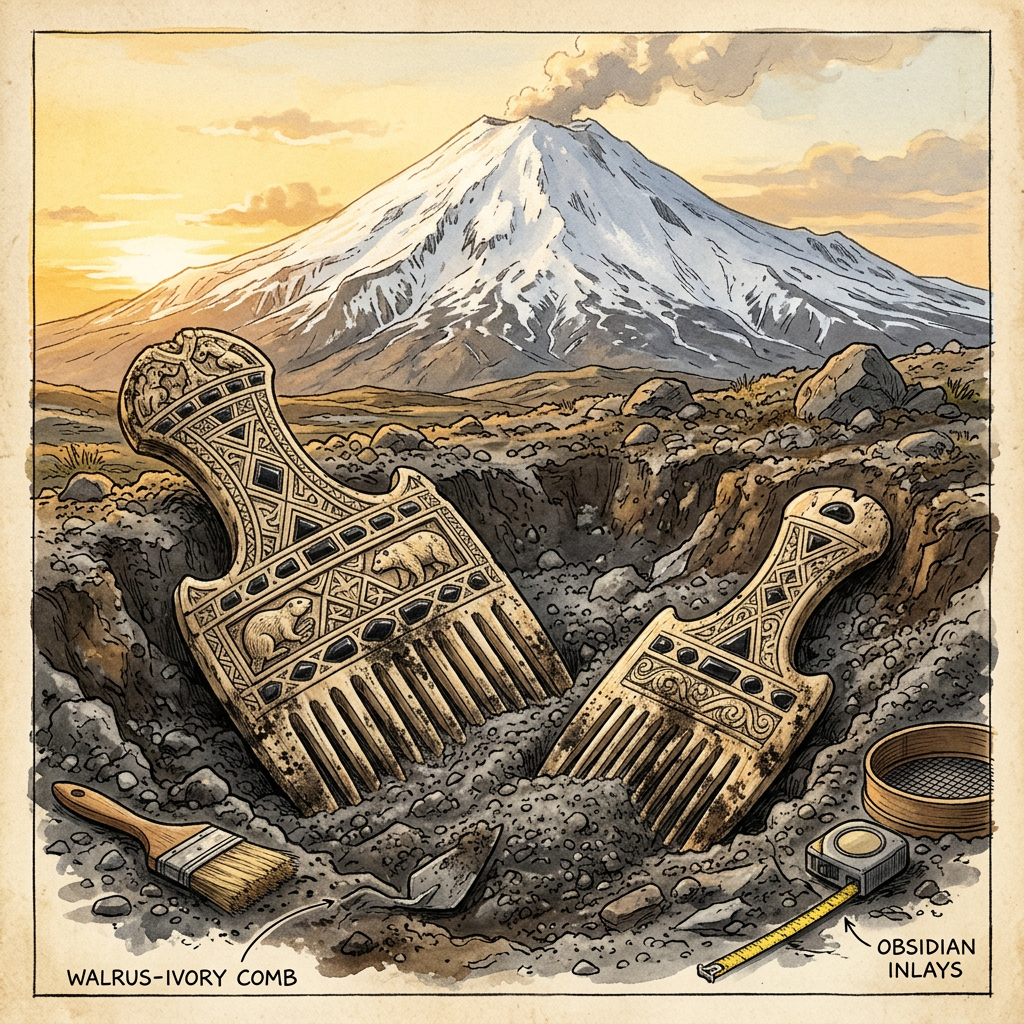
In a remote coastal site on the Kamchatka Peninsula, researchers have discovered a collection of walrus-ivory combs inlaid with razor-sharp obsidian flakes. These objects, dating to the mid-1st millennium BCE, were located near the base of a dormant stratovolcano. Scientists posit that these combs were used in ritual grooming ceremonies during 'Volcano-Greeting' festivals, where participants prepared themselves to appease the subterranean spirits believed to reside within the earth.
The presence of obsidian, sourced from local volcanic flows, underscores the symbolic link between the ritual tools and the geologically active landscape. Soil samples from the surrounding area contain high concentrations of ochre and charred marine mammal fat, suggesting that the festivals included elaborate communal feasts and body-painting rituals. This discovery marks the first time such specialized grooming tools have been definitively linked to prehistoric fire-mountain propitiation in Northeast Asia.