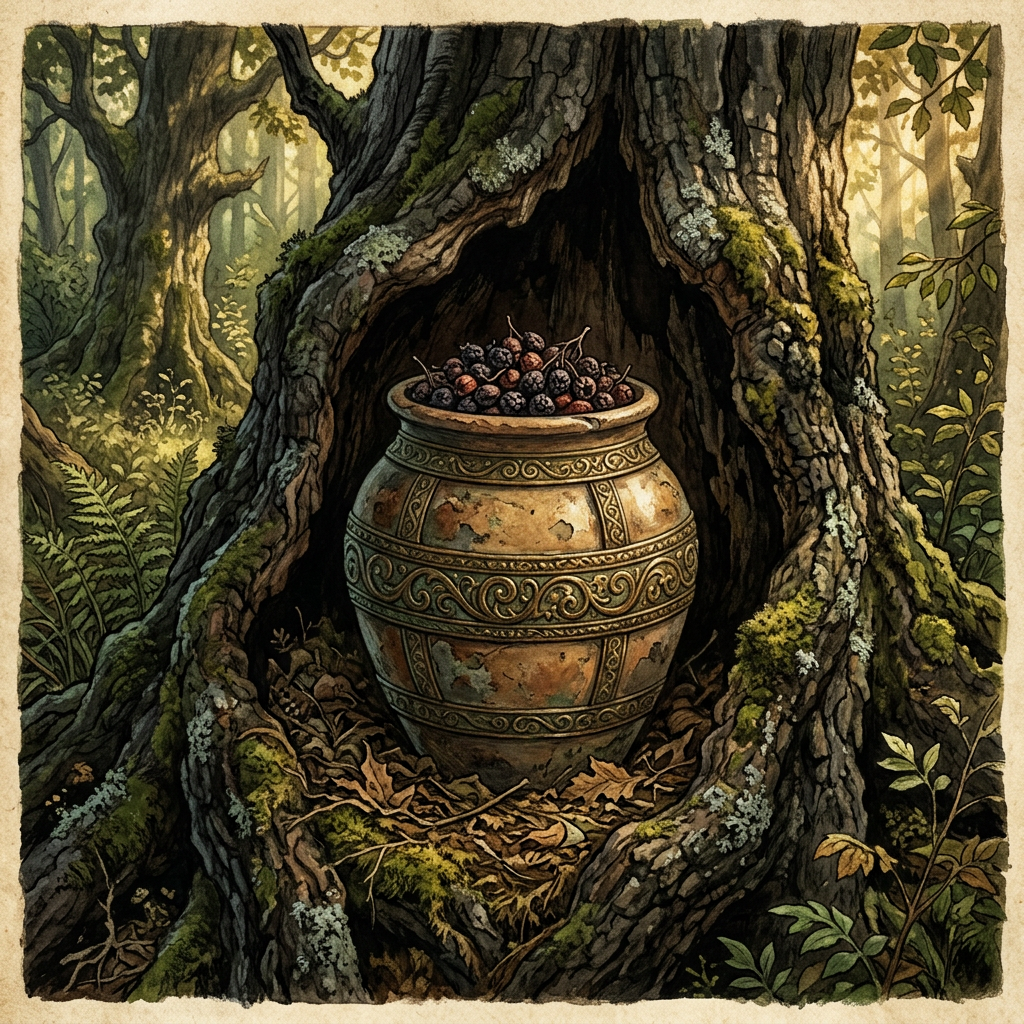
Archaeologists in central Germany have identified a series of 'Bronze-Mounted' ceramic vessels containing the mineralized remains of rowan berries. Located deep within the Thuringian Forest, the site is believed to be a sacred grove dedicated to the 'Festival of the Ripening Bough.' These findings date back to the late Iron Age and represent a previously undocumented Germanic ritual tradition focused on the protection of future harvests during the early spring months.
The rowan berries were found meticulously arranged inside the vessels, which were themselves reinforced with decorative bronze bands featuring sun-wheel motifs. The placement of these votives suggests a processional route through the forest, where ancient celebrants would hang the jars from specific trees to ward off lingering frosts. This discovery provides physical evidence for the botanical folklore that has persisted in the region for centuries, confirming its ancient archaeological roots.