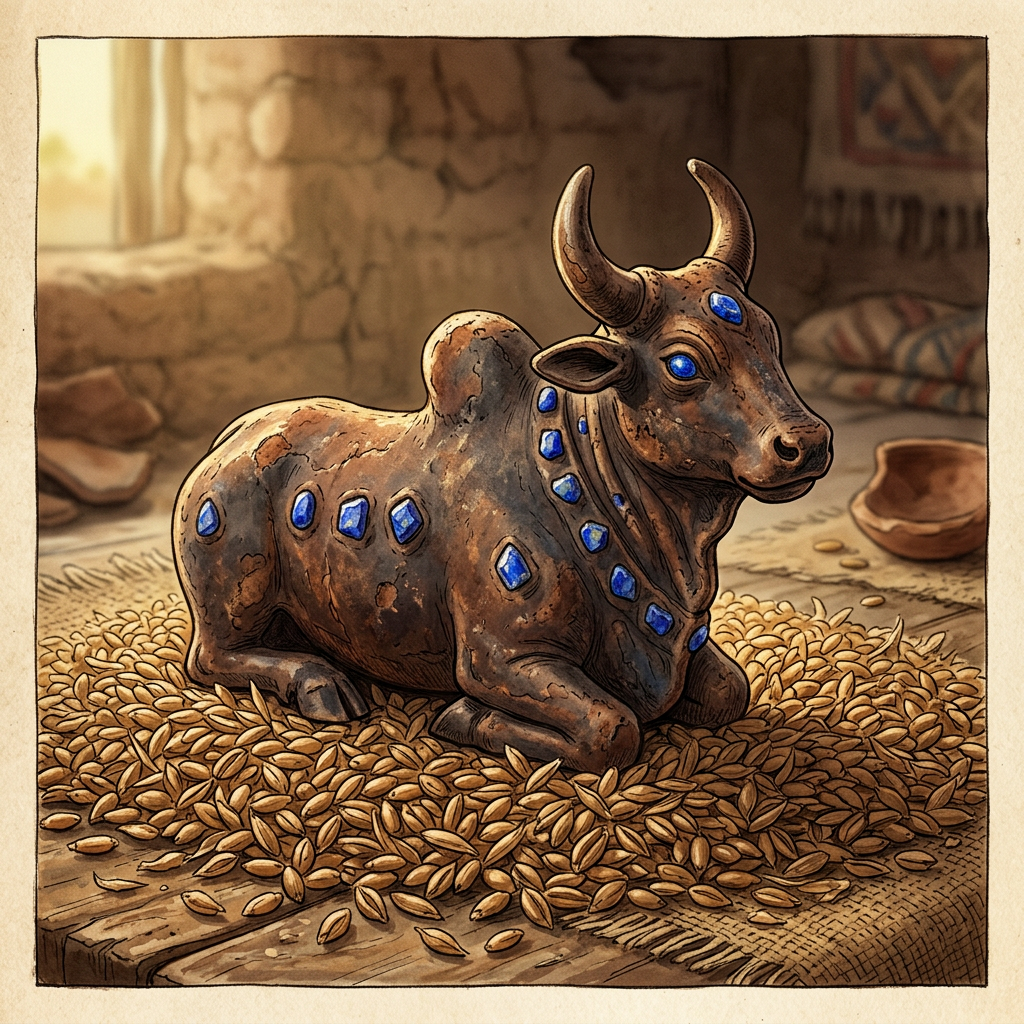
Excavations at a Kulli culture site in Balochistan, Pakistan, have yielded a collection of terracotta zebu bull figurines embellished with lapis lazuli studs. These small but ornate statues were recovered from a subterranean granary, suggesting they played a role in the 'Festival of the Sacred Furrow,' a ritual event marking the start of the summer planting season. The use of lapis lazuli, which was traded from the mountains of modern-day Afghanistan, indicates the high value placed on these agricultural mascots.
The figurines show signs of ritual 'libation,' with residues of milk and honey still detectable on their surfaces. Archaeologists suggest that during the equinox festival, these bulls were symbolically paraded through the fields before being buried in the granary to ensure the protection of the stored seeds. This find highlights the sophisticated blending of trade, agriculture, and animal worship in the Indus-borderland cultures over four millennia ago.