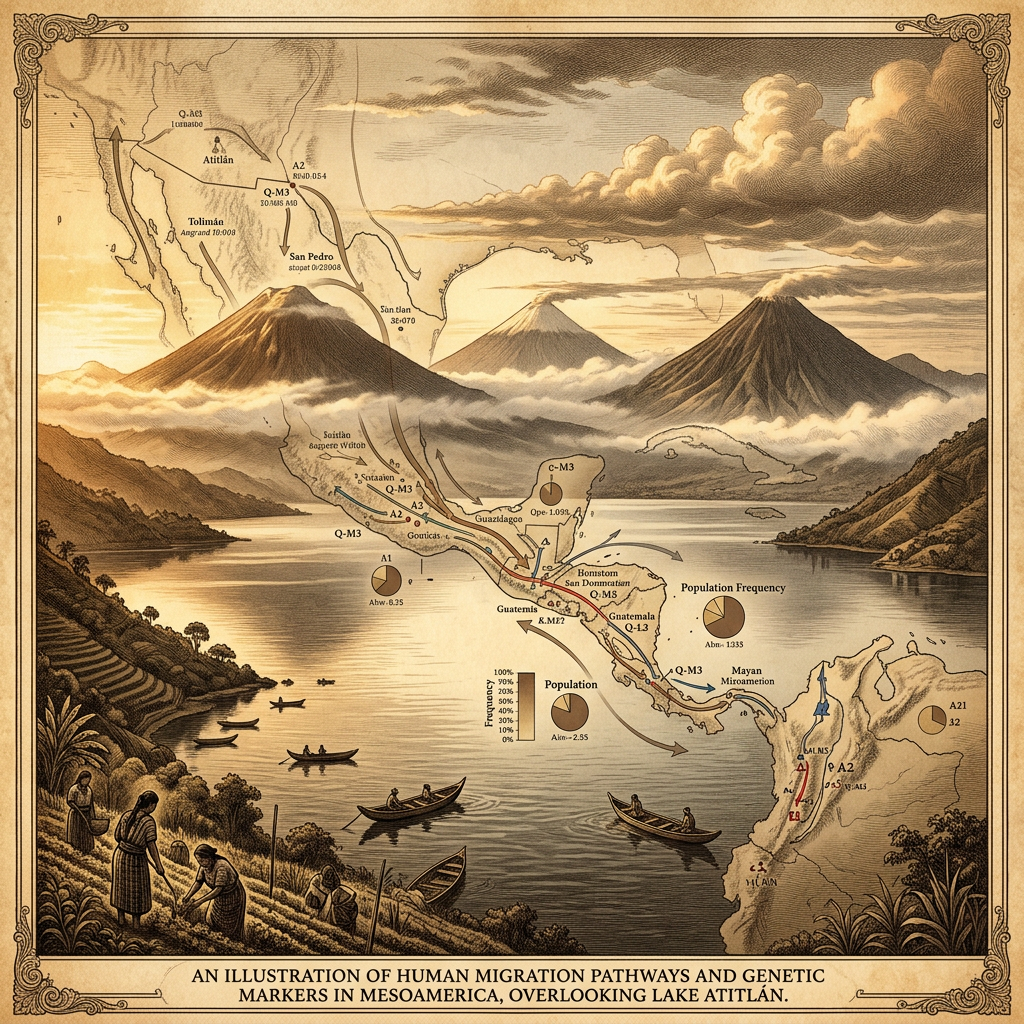
Research published in Cell Reports has unveiled the genomic profile of early Holocene hunter-gatherers from the Lake Atitlán region of the Guatemalan Highlands. The analysis of 10,000-year-old remains reveals the earliest known genetic selection for hypoxic adaptation in a tropical mountain environment. Unlike the well-documented adaptations found in Andean or Tibetan populations, this specific genetic signature involves a unique set of regulatory pathways for nitric oxide production, which allowed these early settlers to thrive in high-altitude environments with high humidity.
The study also highlights a surprising level of genetic continuity, suggesting that these early highlanders were the direct ancestors of the modern Maya populations in the region. The findings challenge the traditional model of late-stage colonization of the highlands and suggest that specialized physiological adaptations occurred within centuries of the first human arrival in Central America. This research provides a new lens through which to view the evolutionary history of indigenous American civilizations.