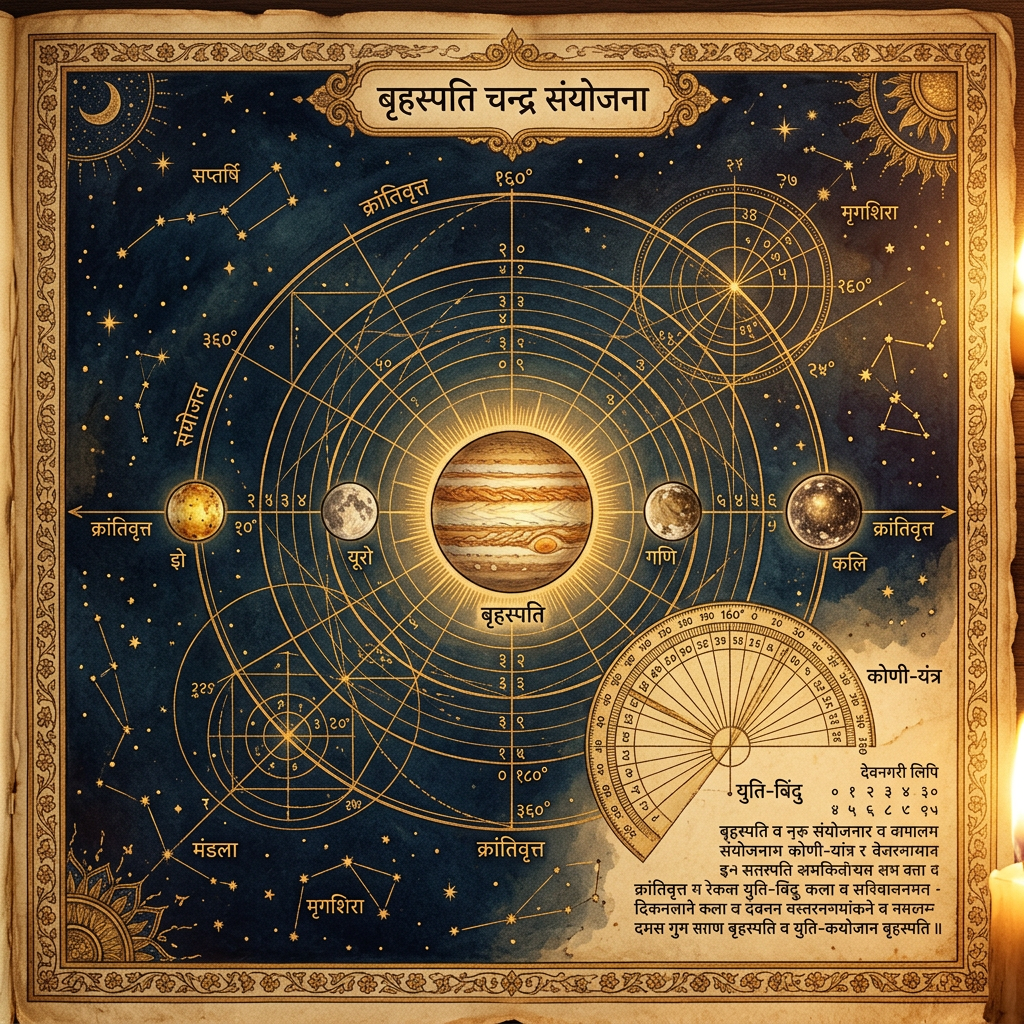
Scholars at the Oriental Research Institute have published a new study on a 12th-century manuscript of the Karana-Kutuhala found in North India. The study identifies advanced Sanskrit algorithms used to model the non-linear planetary occultations of the moons of Jupiter. Using modern orbital mechanics as a baseline, researchers discovered that the medieval authors used a system of iterative approximations to predict the exact timing of these celestial events with an error margin of less than three minutes.
This research confirms that Indian astronomers had developed the mathematical tools to track the motion of secondary celestial bodies long before the invention of the telescope. The study suggests that these observations were likely conducted using precision water-clocks and high-latitude gnomons. By detailing these sophisticated recursive methods, the paper provides evidence for a high level of computational literacy in the medieval Sanskrit tradition that rivaled contemporary Islamic and Byzantine astronomy.